

First Sentence Fridays is a series focused on the style and experience of new books.
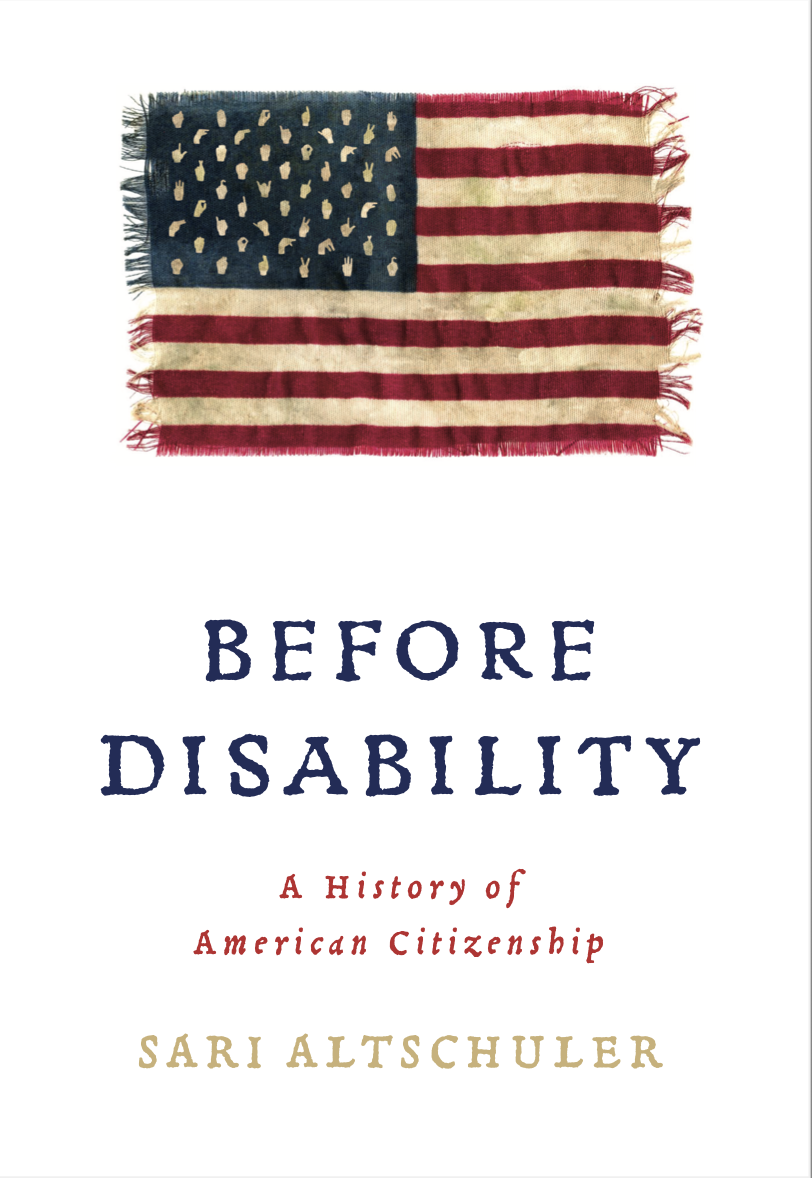
About Before Disability: A History of American Citizenship:
The history of disability rights is often told as a recent one, but it is not. In the wake of the American Revolution, many of the differences we now call disabilities could be accommodated into citizenship—and for some even exemplified its promises. By the antebellum period, however, disability was becoming a powerful, racialized tool of civic exclusion and, by the century’s end, a target for eugenic elimination. In Before Disability, Sari Altschuler tells the story of how this dramatic transformation occurred.
Avidly: What’s the first sentence of your book? No cheating!
Sari Altschuler: “On May 21, 2019, Lucio Delgado, a literate, young, Latino man who had spent six years learning English, took the test for US citizenship.”
What’s something specific you remember about writing this sentence? Where were you? When in the book writing did you write it? Maybe tell us your favorite word in it?
This sentence seems tame, but the context behind it isn’t! I wrote that sentence for the Washington Post’s “Made by History” section. I was very jetlagged and typing from an apartment I was renting in Paris. But I had been following Delgado’s story. He had just received his citizenship—finally—and I wanted more people to understand why that was important. The Post was interested in the piece but it never ran because I wrote it in…early March 2020. A few days later, Trump announced the borders were going to close. I fled France with about thirty minutes to pack my bag. A few days later I filed my final draft. The Post didn’t exactly reject the piece, but they said they were sorry, they really needed pieces about covid for the foreseeable future. I sent them something else. But the sentence remains!
Now that it’s all written and done, what occurs to you about how your first sentence connects to the book as a whole? In the ideas, style, experience?
The first sentence places the reader squarely in the present. That’s great. Even though it’s a book about the eighteenth and nineteenth centuries, Before Disability uses that history as a resource for contemporary disability activism. Also, the sentence highlights all the book’s main interests: disability, citizenship, and race. I played around with including the word race in the title, but everything felt took clunky. It’s a packed first sentence, but I like that it puts the book’s key concepts upfront.
I’m going to cheat a little now. The drama of the book’s opening is really less in the first sentence alone than in the first paragraph. It’s short, so I’ll include that here:
On May 21, 2019, Lucio Delgado, a literate, young, Latino man who had spent six years learning English, took the test for US citizenship. For a permanent resident who met the requirements, the process should have been simple. Nevertheless, when he reached the literacy portion of the test, which required him to “read a sentence” in English, Delgado faltered. As a man with visual impairments, he was offered a large-print version of the test. “I’m like, I don’t read large print,” he recounted afterward, “I’m totally blind.” Delgado failed. No braille version of the US citizenship test existed.
!!! THAT IS BONKERS
Tell us one or two specific details about how you like to write: home/office/café, soundtrack or silence, favorite mug, favorite hoodie, preferred mode of pencil/pen/notebook/font/software?
I used to love writing in coffee shops, but now, after the pandemic and parenthood, I like writing at home. I make my set up as cozy as possible. I have a spot on the couch that gets really good sunlight. I pull out fluffy pillows, a soft blanket, and my best athleisure.
Okay here we need some more details! What counts as “best” athleisure for your writing day? Does it vary? I personally have several levels of soft pants, and I’ve noticed that when I’m really trying to gear myself up, I can’t wear sweats— I need leggings with some compression. It’s like there’s some correlation between baggy pants and baggy sentences maybe? Is this just me? (I also prefer a specific pull-over hoodie that I wear basically no other time.)
Ooh, I’d say I’m the opposite! Don’t want to feel anything pressing on my body at all. I have these leggings that were advertised to me as fitting “three sizes in either direction” (somehow still flattering!). I have a few pairs of them, and I rotate. Writing for me is a kind of retreat from everything else—email, dishes, politics. Anything that makes me more aware of my body brings me back to the demands of the everyday, and I’d like to be as far from that as possible when I’m writing.
Tell us one other thing you worked hard on in this book and are proud of!
This book really required me to see the world differently, which, at times, was very hard. I’d encounter something in a novel, in a court case, or in an archive andhave this intuition. Then I’d have to really strain to stick with it—not because I was wrong but because following that line of thought required breaking ways of thinking I’d developed over decades of reading.
Here’s an example: In the nineteenth century, blind readers used books printed in tactile, raised roman letter fonts like the one invented in Massachusetts, which was called “Boston line type.” I was doing some research in the Perkin’s School for the Blind’s archives, when I came across a Boston line type copy of The Scarlet Letter. I asked myself: what could the very existence of this book teach us about The Scarlet Letter? I realized almost immediately that Hester’s embroidered scarlet A was itself a raised print letter! The process of sticking with this insight challenged what I knew about Hawthorne’s romance. Happily, though, it birthed the whole third chapter on blindness and literacy!
Is there a writing tic you wrestled in this book? How did you manage it? Or, is there a style/voice thing you really tried for?
My biggest struggles have been about audience. Obviously, I was trained as an academic writer, and I went to college in the 1990s, when difficult writing was seen as a mark of complex thinking. I remember adding long words to my essays so that they sounded more sophisticated!
I especially wanted to avoid that habit here because I wanted this book to be meaningful and accessible to the disability communities whose history it is. I also wanted to make my indebtedness to so many other thinkers, scholars, and activists clear—it seemed to me in the spirit of disability studies’s focus on interdependence— without interfering with the book’s readability. As a result, you’ll see the book is about two hundred pages long, but it has an additional hundred pages of endnotes and bibliography.
My second struggle with audience was internal to academia. I wanted to bridge conversations between early American historians and literary scholars. That’s another reason for putting the scholarly conversations, historiography, and theory in fairly thick endnotes and trying to tell a good story in the main text.
What’s your favorite sentence in the book? What specifically do you like about it?
This is hard! Maybe this one:
“A few months before Peabody arrived at Perkins, for example, Bridgman had bitten the future senator Charles Sumner and was not sorry.”
I like it because it really shows disabled Americans in the past as people exerting their own opinions, knowledge, will, and preference—not just fitting into convenient scripts. Laura Bridgman was the first deafblind person to be taught to read and write. Samuel Gridley Howe (founder of the first school for blind students) worked hard to make her an international example of his educational model’s success. He envisioned her as a blank slate for heady questions about religion, philosophy, education, etc. And he succeeded in creating a deeply sentimental story that made her, according to contemporary accounts, the “most famous” child in America.
But Bridgman wasn’t a blank slate; she was her own person. She left her own (fabulous) accounts of her experience, and that’s where my sentence comes from. She criticized Sumner because he was “not gentle” and explained: “i bit sumner, because he squeezed my arm yesterday, he was very wrong” (238, endnote 157). For me, this is just one great example of where the knowledge and experiences of disabled people wonderfully complicate the stories told about them.
See Elisabeth Gitter’s The Imprisoned Guest if you want to know more about Bridgman and Howe’s complex relationship!
Share the love: what’s a first sentence written by someone else (any genre!) that you think is great?
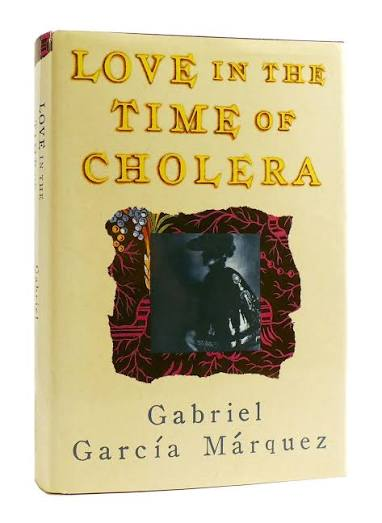
Many years ago I taught high school English, and I always started the year with ten first sentences (teachers, feel free to steal this assignment!). I’d ask my students to pick one and imagine the rest of the book based on the first sentence. Here’s my favorite: “It was inevitable: the scent of bitter almonds always reminded him of the fate of unrequited love.”
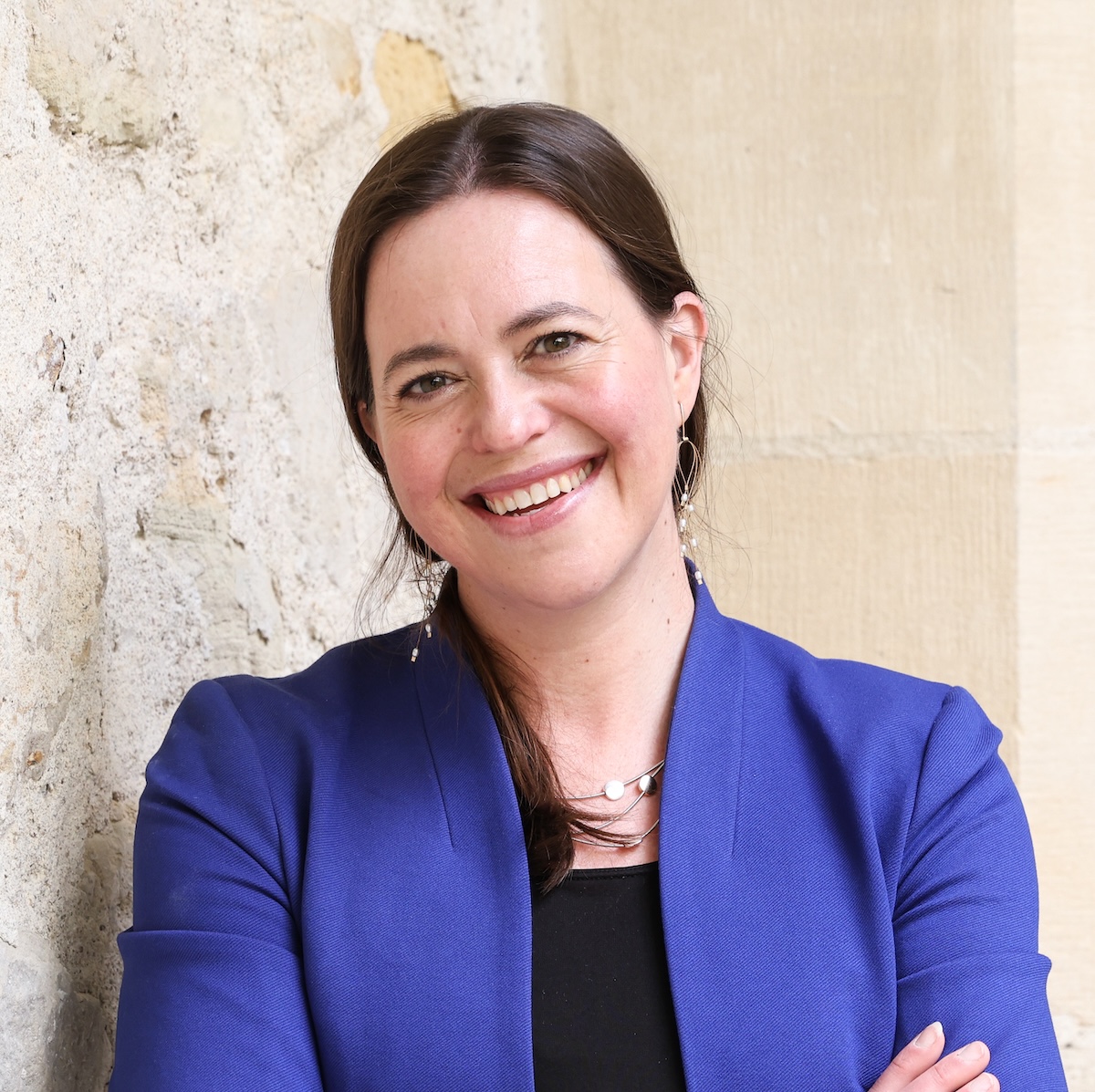
Sari Altschuler is Associate Professor of English and Founding Director of the Health, Humanities, and Society Program at Northeastern University. She is a co-editor of Keywords for Health Humanities (NYU Press, 2023) and the author of The Medical Imagination: Literature and Health in the Early United States (University of Pennsylvania Press, 2018).
Order Before Disability now!
Discover more from Avidly
Subscribe to get the latest posts sent to your email.