

First Sentence Fridays celebrates the prose and process of new books.
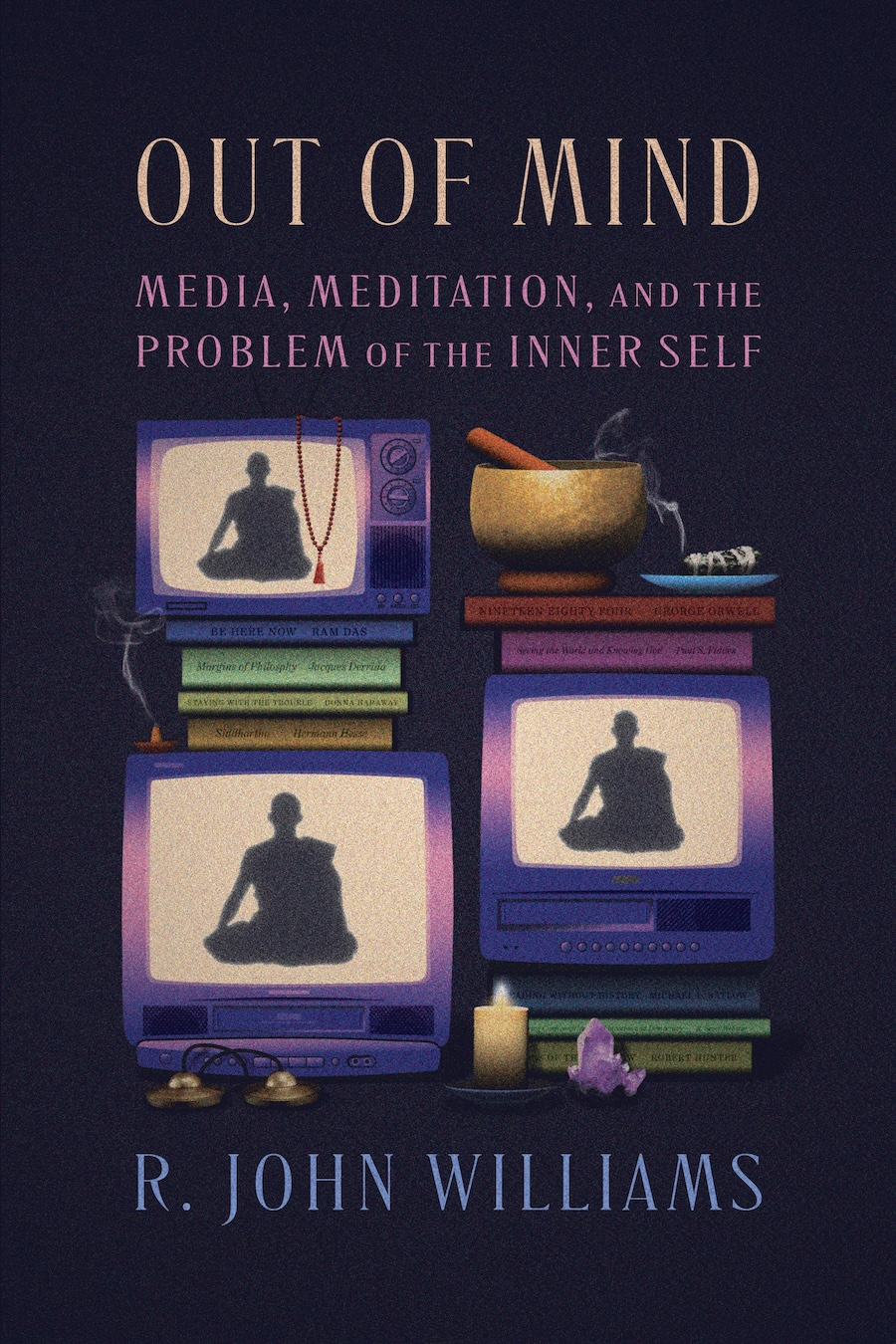
About Out of Mind: Media, Meditation and the Problem of the Inner Self:
Mindfulness meditation is often presented as a simple practice of turning inward and quieting the world to discover an authentic “inner voice,” but the very idea that consciousness contains such a voice depends on a slew of contradictory beliefs about Buddhism, neuroscience, and more. In Out of Mind, R. John Williams challenges the core (and misguided) assumptions about human nature that shaped the development of modern meditation, revealing how they were informed by nineteenth-century theosophy, German idealism, Buddhist modernism, Heideggerian mindfulness, Cold War brainwashing, and even phenomena like sensory deprivation tanks. Against the notion that truth lies hidden in our brains, Williams argues that we are never sealed off from the world. Our consciousness extends beyond our own minds—into the intricate web of language, literature, art, and other people to which we are intimately connected.
Avidly: What’s the first sentence of your book? No cheating!
What’s something specific you remember about writing this sentence? Where were you? When in the book writing did you write it?
I knew pretty early on that I wanted to start the book with this scene. In it, a fairly nice, academic gathering is suddenly rendered “spiritual” by a meditator who insists we all set aside our notes and observe a “moment of presence.” It’s an increasingly common practice! So that sentence felt like a fairly straightforward way to set the stage. It also spoke to the conditions under which I started researching these assumptions about human interiority.
Can you share an early draft of this sentence? Or tell us about a favorite word, something you wrestled with, some way it changed?
Is there a writing tic you wrestled in this book? How did you manage it? Or, is there a style/voice thing you really tried for?
Oh, so many tics! And so much hair-pulling, head-scratching, and pencil-twirling to try to get around them! For instance: I overload examples, particularly when I’m making the case for something unexpected or counter-intuitive. Partly this is because, I think, challenging expectations or common assumptions requires detail and comprehensiveness. You can be breezy and terse, but it’s easier when rehearsing accepted wisdom.
But, no doubt, my overloaded details also come from various forms of insecurity and vanity. If I found a hundred examples of some totally unexpected thing, then, by god, shouldn’t I include them? Won’t my reader flounder without them? Isn’t it dazzling to see so many? Luckily, all of my best colleagues and editors have a way of gently walking me off that ledge. (Or mostly off that ledge—the book is still 465 pages long.)
Tell us one or two specific details about how you like to write: home/office/café, soundtrack or silence, favorite mug, favorite hoodie, preferred mode of pencil/pen/notebook/font/software?
The upshot, for me, is that I’ve never had writer’s block. Nothing ever seems final or fixed in stone, so I am always free to keep going. But the downshot (is that a word?) is that I end up having to revise, revise, revise, and then revise some more, and probably end up spending just as much time and energy on the final product as someone who requires more isolated retreats or plods painstakingly over every word.
Tell us one other thing you worked hard on in this book and are proud of!
Of course, this is also the chapter I am most expecting to get pushback on. There’s a veritable army of Heidegger bros out there. They’re going to be completely fine with the idea that he was “misread” in his reception by humanistic psychologists in the 1960s, but will no doubt recoil defensively at the suggestion that the philosopher’s own thinking may have directly set the stage for that reception. I had enormous fun, though, in mapping out the path from Heideggerian “authenticity” to mindfulness’s “inner self”— re-creating, for instance, Heidegger’s interview with a Buddhist monk as a television screenplay or synthesizing his ideas in a kind of “primal scene.” Whether some of these playful turns will be appreciated by my readers is still an open question!
Now that it’s all written and done, what occurs to you about how your first sentence connects to the book as a whole? In the ideas, style, experience?
What’s your favorite sentence in the book? What specifically do you like about it?
Share the love: what’s a first sentence written by someone else (any genre!) that you think is great?
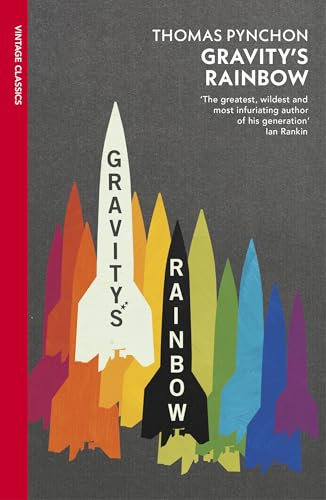
And “a” screaming? Not, “a screaming sound” but a screaming? Right in that opening line we see the specter of chaos, perfectly torching—in that first-letter’s rainbow-like trajectory—all the technical progress of enlightenment knowledge. The whole book, I think, is brilliantly forecast in that single first sentence.
Order Out of Mind now from University of Chicago Press

Discover more from Avidly
Subscribe to get the latest posts sent to your email.