

First Sentence Fridays celebrates the prose and process of new books.
About Out of Sync:
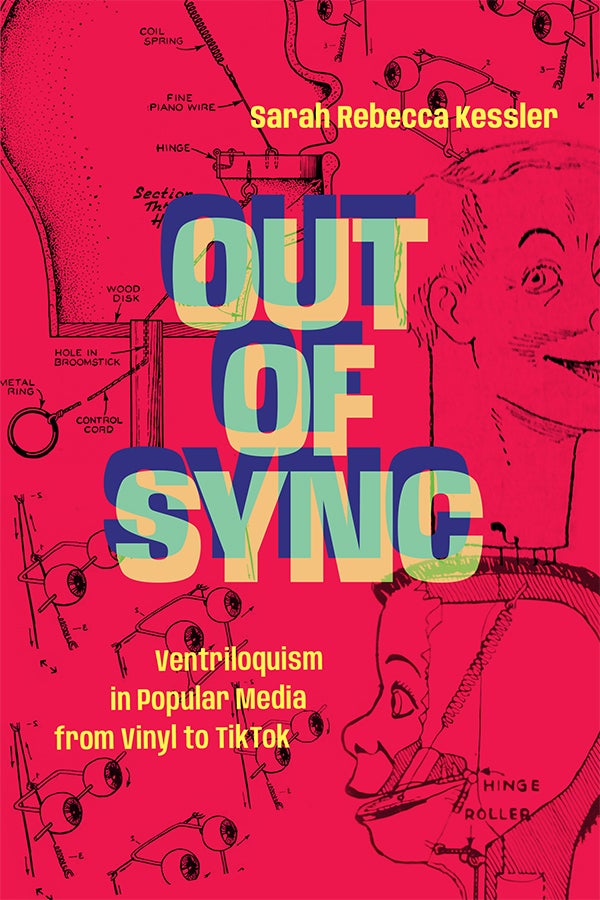
Ventriloquism, or the art of “throwing the voice,” has outdated and even unsettling connotations to many, associated with vaudeville and the nefarious talking dolls of so many horror movies. Despite this, ventriloquism remains a popular performance art, filling theaters and concert venues with audiences eager to hear puppets voice what humans, in an increasingly polarized present, want to say but feel they can’t. In Out of Sync, Sarah Rebecca Kessler explores ventriloquism’s persistence within, and relevance to, the contemporary moment, while also tracing ventriloquism’s travels across media including vinyl records, documentary films, music videos, and social media platforms such as TikTok. Looking closely at the art and its outgrowths, Out of Sync gives insight into the operations of race, gender, and sexuality as distinctly audiovisual processes.
Avidly: What’s the first sentence of your book? No cheating!
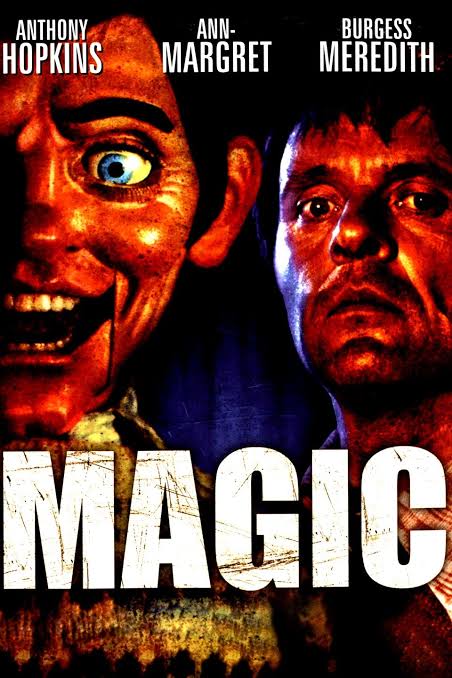
Sarah Rebecca Kessler: “In the 1978 horror film Magic (dir. Richard Attenborough), a youthful Anthony Hopkins plays the role of Corky Withers, a failing magician whose career in show business finally takes off when he incorporates ventriloquism into his stage act.”
What’s something specific you remember about writing this sentence? Where were you? When in the book writing did you write it? Maybe tell us your favorite word in it?
I honestly don’t remember writing this sentence at all. I don’t remember writing most of my own work, which is actually why I started thinking about ventriloquism in the first place. I was like, wait, who is *my* puppetmaster? I’m not sure where I was when I wrote the sentence, but I was probably in my office at home on “the pink couch”—a rose-colored couch I prefer to my mildly uncomfortable desk chair. I likely wrote that sentence about mid-way through writing the book (which took me about ten years to write), so five years in? I do remember at some point thinking, “I need to start the book with something concrete,” and this horror movie from the 70s seemed like as good a hook as any. My favorite word in the sentence is “Corky” because that was also the name of my dearly departed tuxedo cat Corky, who was in fact named after Anthony Hopkins’s character in the film.
Now that it’s all written and done, what occurs to you about how your first sentence connects to the book as a whole? In the ideas, style, experience?
The subject of the book is ventriloquism as a stage art, a media practice, and an audiovisual metaphor. The sentence already brings together at least two of those things, the vaudevillian practice of ventriloquism and the contemporary sound film, which, in the case of Magic, uses the older art form to dramatize the horror of losing control over one’s faculties—not merely the faculty of speech but also of physical agency. A horror movie from the 1970s is a crass cultural object, much like ventriloquism itself, so the combination of the two is doubly crass. The very notion of a magician, much less a failing magician, is also pretty cringe.
I guess I wanted to begin with centering those vibes, letting the reader know they’re going to be dealing with materiality in the most direct and basic sense. Also, what else do a 1970s horror movie and ventriloquism have in common? They’re both outdated, suffused with a certain woodenness. The sense of anachronism was very important to Out of Sync from the beginning and the book’s first sentence channels that without getting too theoretical about it.
Tell us one or two specific details about how you like to write: home/office/café, soundtrack or silence, favorite mug, favorite hoodie, preferred mode of pencil/pen/notebook/font/software?
I used to be very precious about my writing conditions and that changed when I realized that writing is more about writing than it is about thinking. Now I write in 40-minute increments called “units” (shout out to my colleagues Elda María Román and Corrine Collins for introducing me to this method) and I can basically do it anywhere—my office, a café, a plane… I prefer silence or ambient music but music playing ambiently isn’t too much of a distraction.
I really like writing by hand in a Muji notebook with a Muji pen, because if I’m writing in ink I can’t delete as I go, which helps me avoid overthinking things. I do usually just type on my laptop though… I feel compelled to add that anti-anxiety meds really helped me overcome what I once believed was writer’s block. No more spiraling over single sentences for hours! Life is too short for that shit.
Tell us one other thing you worked hard on in this book and are proud of!
I wrote the book’s fifth chapter, which is about lip-syncing and TikTok, many years after drafting the first four chapters, and I’m proud of how lucid it is and how relatively easy it was for me to write. I worked on it for a certain amount of time every day during the one semester of leave I had leading up to tenure and it’s one of the only pieces of writing I feel I have a truly healthy relationship to—mostly because I didn’t sweat the small stuff in the moment, which made the writing process much more fruitful and enjoyable.
Is there a writing tic you wrestled in this book? How did you manage it? Or, is there a style/voice thing you really tried for?
The writing tic I wrestled is the general style of academic writing, which frankly has always felt too wordy and just too much to me. I cut the book down a lot in editing and still feel I could have cut more.
It is very strange to reread a book you wrote over the course of ten years because you’re looking at a montage of different moments in your own writing and that isn’t always pretty. I was trying to achieve different things at different times, to impress different people—and in the end I was just trying to say something that still often feels obscured by the writing itself. If I had a goal for the next book it would be to be as direct as possible while still conveying a sharp sense of humor.
What’s your favorite sentence in the book? What specifically do you like about it?
“I realized that I was at once talking to myself and shouting into the void, which was shouting back into me as Nietzsche had long ago indicated that it would. I realized that the monsters Nietzsche wrote about are all too real (and that, of course, he himself was one of them), and I wondered if writing this book— whose voice is at once my own and that of someone completely alien to me— was my way of battling them, or becoming them, or both.”
I didn’t cheat on the first question so I’m letting myself cheat a bit here, since it’s two sentences which could, if I had chosen to write them another way, be connected by a semicolon. I think that for all my talk of directness I like how dramatic and pompous this sentence is, whilst also being true to my own experience of using ChatGPT (the subject of the book’s epilogue). I did, and do, spend a tremendous amount of time thinking about the abyss.
Share the love: what’s a first sentence written by someone else (any genre!) that you think is great?
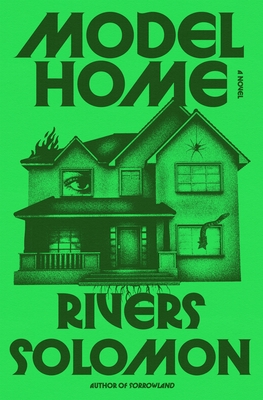
“Maybe my mother is God, and that’s why nothing I do pleases her.” It’s from Rivers Solomon’s novel Model Home. I mean, there is just a lot there right from the beginning. A whole lot of feeling. To reread that line after reading the whole book is ghostly.
Sarah Rebecca Kessler’s interdisciplinary research spans the fields of comparative media studies, critical race theory, queer and gender studies, voice and sound studies, and television studies. Her articles and essays have appeared in Camera Obscura, Film Quarterly, In These Times, Public Books, Theory & Event, Triple Canopy, Women’s Studies Quarterly, and elsewhere. She is the TV section editor at Public Books.
Order Out of Sync now from Duke University Press!
Discover more from Avidly
Subscribe to get the latest posts sent to your email.