

First Sentence Fridays is a series devoted to the prose and process of new books.
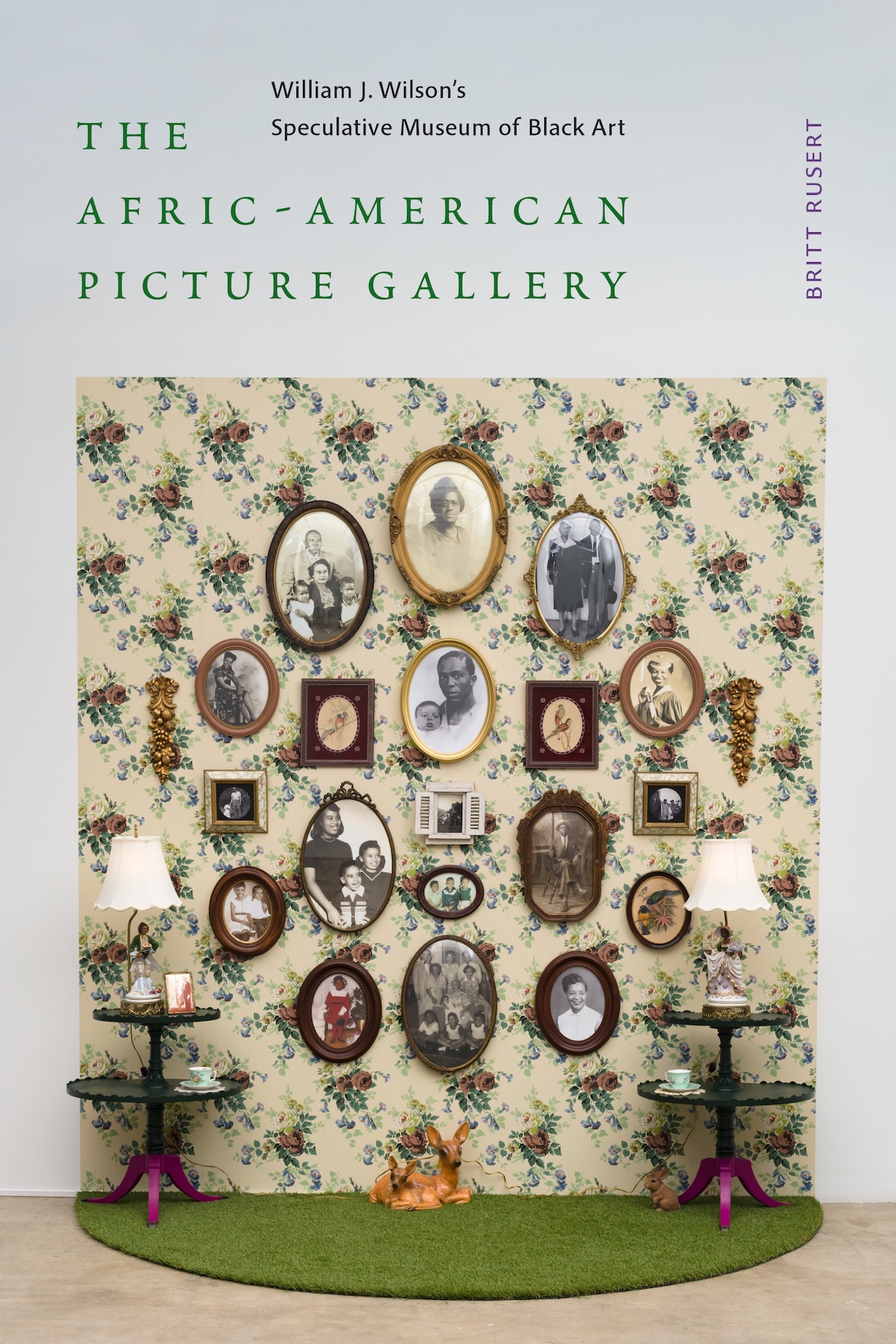
About The Afric-American Picture Gallery: William J. Wilson’s Speculative Museum of Black Art:
In The Afric-American Picture Gallery, Britt Rusert examines a wildly speculative text by the educator, activist, and writer William J. Wilson that was published in the Anglo-African Magazine in 1859. The book chronicles Wilson’s bold imagining of an Afrofuturist museum of art on the cusp of the Civil War and traces networks of Black bohemians and intellectuals living, working, and organizing in mid-nineteenth century Brooklyn.
Avidly: What’s the first sentence of your book? No cheating!
Britt Rusert: It’s not particularly artful, but it is, I hope, clear:
“This book is an extended study of William J. Wilson’s ‘Afric- American Picture Gallery’ (February– October 1859), an experimental periodical series from the late antebellum period that imagines the first museum of Black art in the United States.”
What’s something specific you remember about writing this sentence? Where were you? When in the book writing did you write it?
I wrote this sentence in the aftermath of the pandemic lockdown. So many museums had closed their doors. Many of us were relying on exhibition catalogs and other forms of print media, along with the internet, to “see” art. It changed my sense of the significance of Wilson’s project. So I added a preface to emphasize what I was realizing: that questions of access and accessibility—as well as their racialized and classed dimensions (who does and does not get access)—were already being explored by Wilson over a century and a half ago.
Is there a writing tic you wrestled in this book? How did you manage it? Or, is there a style/voice thing you really tried for?
Wilson’s museum is ekphrastic—composed entirely of written descriptions of works of art. It’s deeply visual, but it reproduces no actual images. And this was very challenging to write about! How do you describe someone else’s descriptions? Should you describe someone else’s descriptions? And how do you write about a textual work that is always pointing readers toward the visual field? Not to mention the fact that Wilson’s narrator, Ethiop, often describes art works that have no real-world referent.
So, a “picture” in Wilson’s “gallery” might be a textual description of an imaginary work in an imaginary gallery. And “sketch” in his text refers to both written sketches and drawings on paper. I tried to be as clear as possible when discussing these many different mediations, but I’m not sure I was always successful. I took solace in the fact that the “Afric-American Picture Gallery” has a labyrinth, almost fun house-like quality to it. Wilson is often aiming for opacity rather than clarity. And that clarified my own writing process.
Tell us one or two specific details about how you like to write: home/office/café, soundtrack or silence, favorite mug, favorite hoodie, preferred mode of pencil/pen/notebook/font/software?
I am a morning writer and generally have to get my hours in before 1PM. Over the past few years, I have found that if I get up early enough I can build a little thinking bubble for myself before the world comes crashing in. I know it’s a total delusion! But it helps me to carve out the space and time I need to get words on the page.
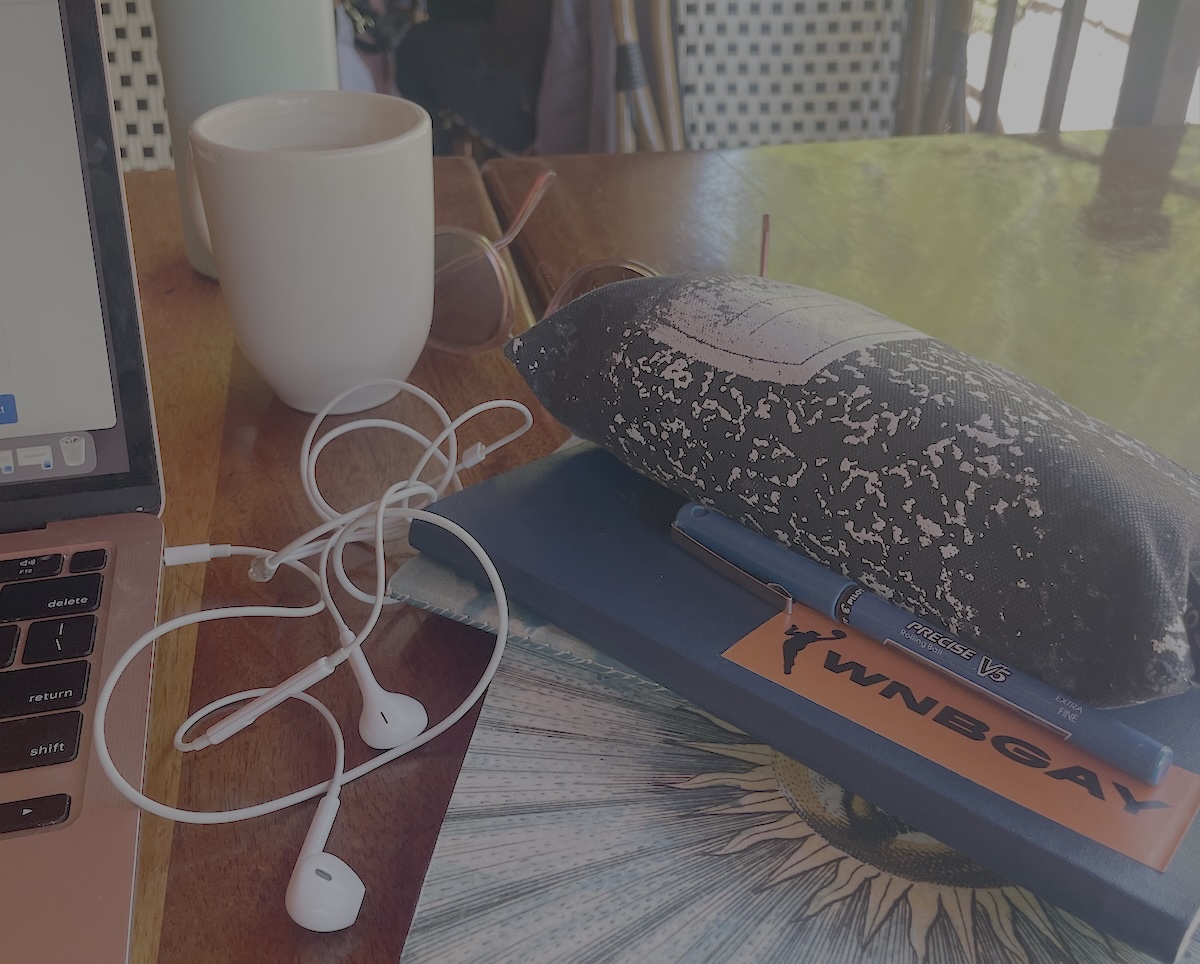
I often listen to curated playlists that I organize a little bit obsessively around the astrological seasons (currently listening to “Virgo szn 26”) and I do lots of writing in coffeeshops. I wrote much of this book in the gardens and on the patio of Esselon Coffee, in Hadley, MA, where I work regularly with my writing buddies, Cameron Awkward-Rich and Signe Predmore. In fact, I’m writing there right now. At a certain point, I considered adding “ham and cheese croissant” to my acknowledgments because I realized that I had created a flaky-layered Pavlovian reward system for myself (if you write for an hour, you get a little treat ). Sometimes my mouth starts watering as soon as I open up my laptop.
Oooh, tell us one song on your playlist??
Look Up, By Joy Oladokun
Tell us one other thing you worked hard on in this book and are proud of!
I started researching this book in earnest during the pandemic lockdown and did so while solo parenting a small child (who is no longer small), teaching remotely while supervising remote learning for a kindergartner, advising graduate students, doing lots of domestic labor, organizing with comrades, caring for friends and lovers, and dealing with chronic migraines. This book accompanied me through a pretty harrowing time in my life, and I feel proud that both of us made it to the other side.
Now that it’s all written and done, what occurs to you about how your first sentence connects to the book as a whole? In the ideas, style, experience?
The first sentence is me, a Virgo moon, trying to be as clear as possible about the scope and topic of the book. But again, the “Afric-American Picture Gallery” is a wild ride. I think the book is at its best when I allow Wilson’s narrator and gallery docent, Ethiop, to take the lead.
Poetry also ended up being crucial to the style and writing of the book. I started reading more poetry and writing my own poems a few years ago. Having a creative writing practice has been transformative for my academic writing. I don’t know if my prose writing has improved, but I certainly enjoy doing it more than I used to.
What’s your favorite sentence in the book? What specifically do you like about it?
I’m bad at picking favorites, but here’s one I quite like because it’s an invitation:
“The years leading up to the Civil War were a period of profound instability, and the anarchism of the moment was unleashing energy that moved Black writers to produce experimental texts with which we have yet to fully reckon.”
Share the love: what’s a first sentence written by someone else (any genre!) that you think is great?
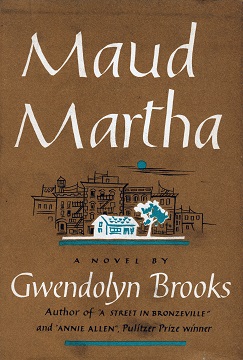
I’ll take any first sentence or line from Gwendolyn Brooks, any day. I especially love this one from her 1953 novel, Maud Martha:
“What she liked was candy buttons, and books, and painted music (deep blue, or delicate silver) and the west sky, so altering, viewed from the steps of the back porch; and dandelions.”
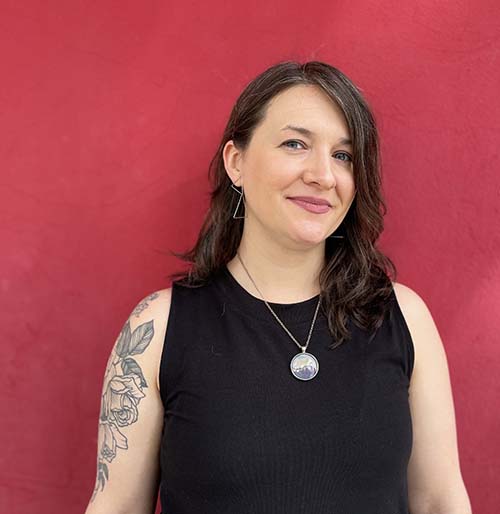
Britt Rusert is Professor of Afro-American Studies at UMass Amherst. She is the author of two books and is co-editor, with Whitney Battle-Baptiste, of W. E. B. Du Bois’s Data Portraits: Visualizing Black America. Britt lives in Amherst, Massachusetts, where she writes, reads, parents, swims, hikes, and edits the Massachusetts Review.
Pre-Order The Afric-American Picture Gallery from Duke University Press Now!
Discover more from Avidly
Subscribe to get the latest posts sent to your email.