

“First Sentence Fridays” is a new Avidly series highlighting the prose and process of new books.
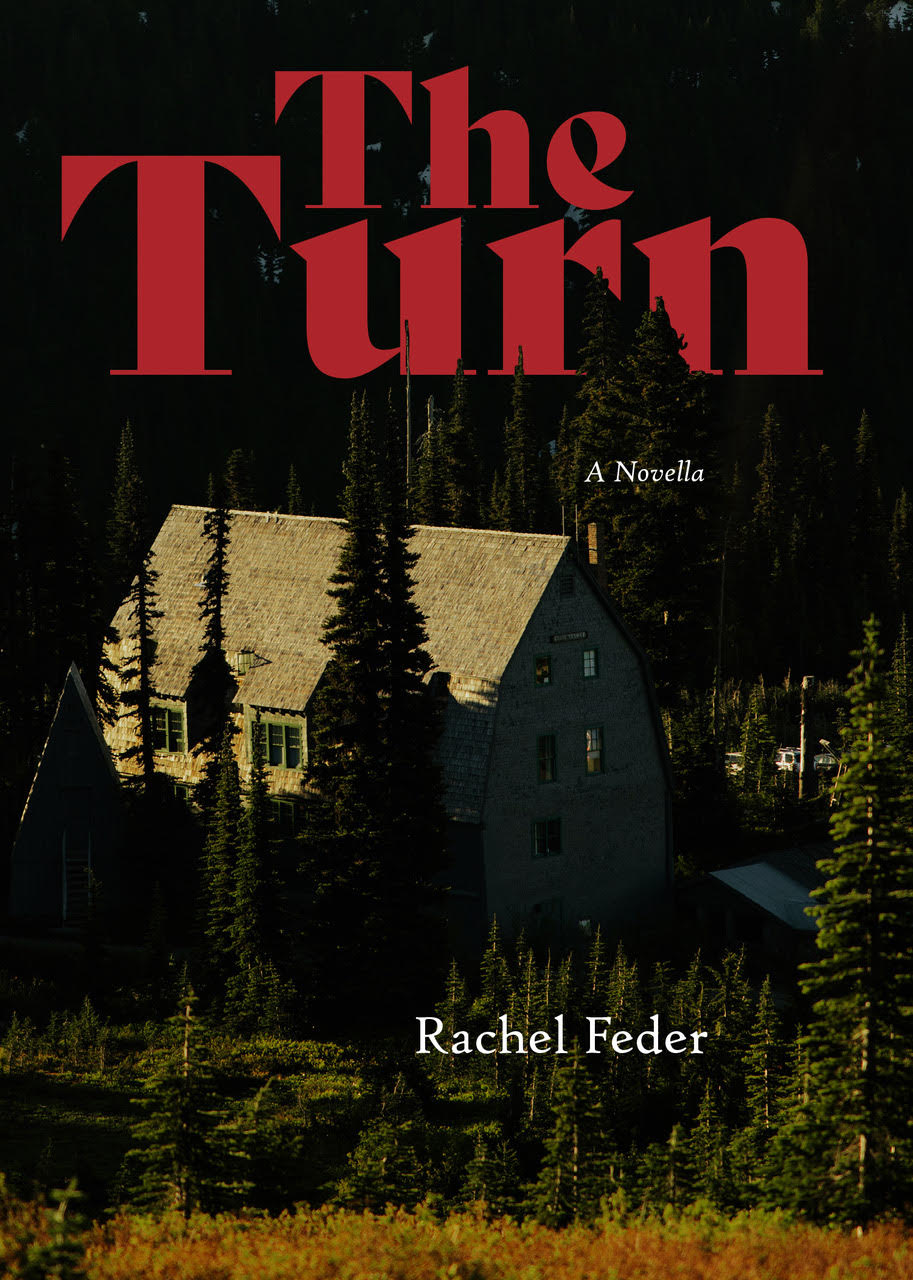
About The Turn:
When Baxter, a young writer and recent college graduate, accepts a live-in nanny position for an affluent professor’s family in the foothills of the Rocky Mountains, she rapidly becomes aware of strange happenings orbiting the family and their children, Quinn and Thebes. After the father becomes estranged and the mother disappears into the night with only one child, Baxter is left utterly lost and in charge of the baby, Thebes, as she struggles to make sense of the bizarre occurrences within the family, the house, and even her own body. But the unnatural occurrences are far from over, and as Baxter stumbles in the dark to protect the child, something sinister stalks the night, looking to sink in its teeth.
Avidly: What’s the first sentence of your book? No cheating!
Rachel Feder: “By night I dream the house is underwater.”
What’s something you remember about writing this sentence? Where were you? When in the book writing did you write it?
This was well and truly the first sentence I wrote of the serialized story that would become the novella. It has always been the first line of the manuscript, and I never changed it.
I wrote this line after the project came to me in a dream. It was the summer of 2020, and my husband and I were unexpectedly living, working, parenting, homeschooling, all of the things from my childhood home in Boulder. I awoke one morning from a dream that I had stepped out into the living room to find that the house was something like a ship at sea. I looked out the window and saw the ocean.
Now that it’s all written and done, what occurs to you about how your first sentence connects to the book as a whole? In the ideas, style, experience?
The novella’s protagonist Baxter isn’t me, but her story came to me when our dreams intersected. For both of us, the question at that moment was: what does it mean to create a world for someone else when the world around you feels like water—shifting, threatening, opaque, unsettled, the opposite of solid ground? I worked on this project in bursts of focused attention spread out over the course of six years, and while the summer of that dream feels like a distant memory, this question still feels vital to me.
Tell us one or two specific details about how you like to write: home/office/café, soundtrack or silence, favorite mug, favorite hoodie, preferred mode of pencil/pen/notebook/font/software?
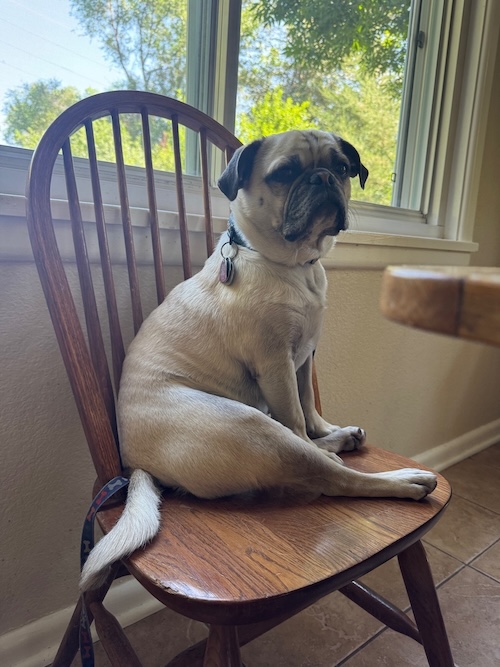
I am trying to decide how much to reveal! I work best at home, at our kitchen table, which is in fact the kitchen table from my childhood home. Our pug mix, Shadow, often hops up to sit on the chair beside me. I write at all hours, whenever I have a moment, but I do my best work in the morning, and sometimes in such early morning it is technically still nighttime. The most aesthetic detail of my writing routine is probably my collection of mugs handmade by my dear and multitalented friend Julia Michie Bruckner (find her stuff @GinkgoTreeStudios on Etsy). I love to sip coffee or tea out of a piece of functional art created by a writer (and doctor, and artist, and…) that I so admire. The least aesthetic detail of my writing routine is probably my subscription to an app called Fit Radio. The playlists on there are meant for swinging kettlebells or whatever, but when my regular playlists are not quite intense enough for my writing flow, they really hit.
Tell us more about this “technically still nightime” concept! What are we talking here? 4? 5? 3? Do you set an alarm? Just not go to bed? Do you have a preferred ring tone?? (I personally like “unfold” for a real early alarm.)
If I’m really in a project, I’ll sometimes just wake up around four in the morning and tiptoe downstairs to the kitchen table. An alarm kind of takes me out of the dream state, but I love writing in that liminal space between sleeping and wakefulness. I’m a total coffee addict, but at 4am I’ll go with green tea. I can’t do this all the time anymore—I’m not as young as I was—but if I can write for two hours before six in the morning, I’m pretty happy.
Tell us one other thing you worked hard on in this book and are proud of!
Humor! The book is atmospheric horror, and quite political. It has such a creeping sense of dread, such a bone-deep engagement with the connections between Gothic fiction and bodily autonomy. But I think and hope that it is also funny. I don’t want to say I tried to make it funny, necessarily… but I worked hard to let it be funny.
What’s your favorite sentence in the book? What do you like about it?
“Pretend, for a moment, this is a painting.” This sentence pops up toward the end of part one, when the tension has risen to a fever pitch. I love how crystalline it is, how cooly Baxter punctures the fourth wall.
Share the love: what’s a first sentence written by someone else (any genre!) that you think is great?
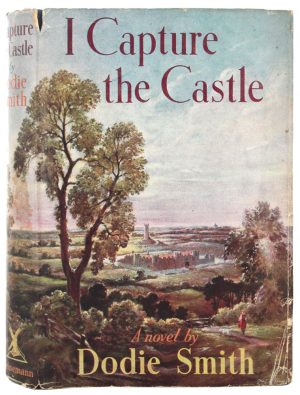
“I write this sitting in the kitchen sink.” This is the first line of Dodie Smith’s 1949 novel I Capture the Castle, which was important to me when I was young. (My childhood best friend and I actually shared a copy (maybe she would say I stole her copy).)
Zooming out, the line encapsulates so much about the ephemeral nature of writing, about how me make art within our quotidian realities. And Smith slaps us in the face with that concept, but at the same time, we don’t get to zoom out—we’re right there in the muck and mire with our protagonist, Cassandra, a literal daughter of modernist fiction documenting her life in a crumbling castle. She’s seventeen—isn’t that the most “in the sink” year of girlhood you can imagine? To my mind, I Capture the Castle is one of the great novels of girlhood as an integral part of intellectual history, and it starts with the absurd poetics of the everyday.
RACHEL FEDER is an associate professor of English and literary arts at the University of Denver. She is the author of Daisy and Harvester of Hearts (both from Northwestern University Press), The Darcy Myth, Birth Chart, and two coauthored works, AstroLit and Taylor Swift by the Book.
Order The Turn now from Northwestern Press! Use the code NUP2026 to get a 25% discount
“The Turn” cover design by Dino Robinson
Discover more from Avidly
Subscribe to get the latest posts sent to your email.