

First Sentence Fridays is a series that celebrates the prose and process of new books.
About The Lay Down Yard:
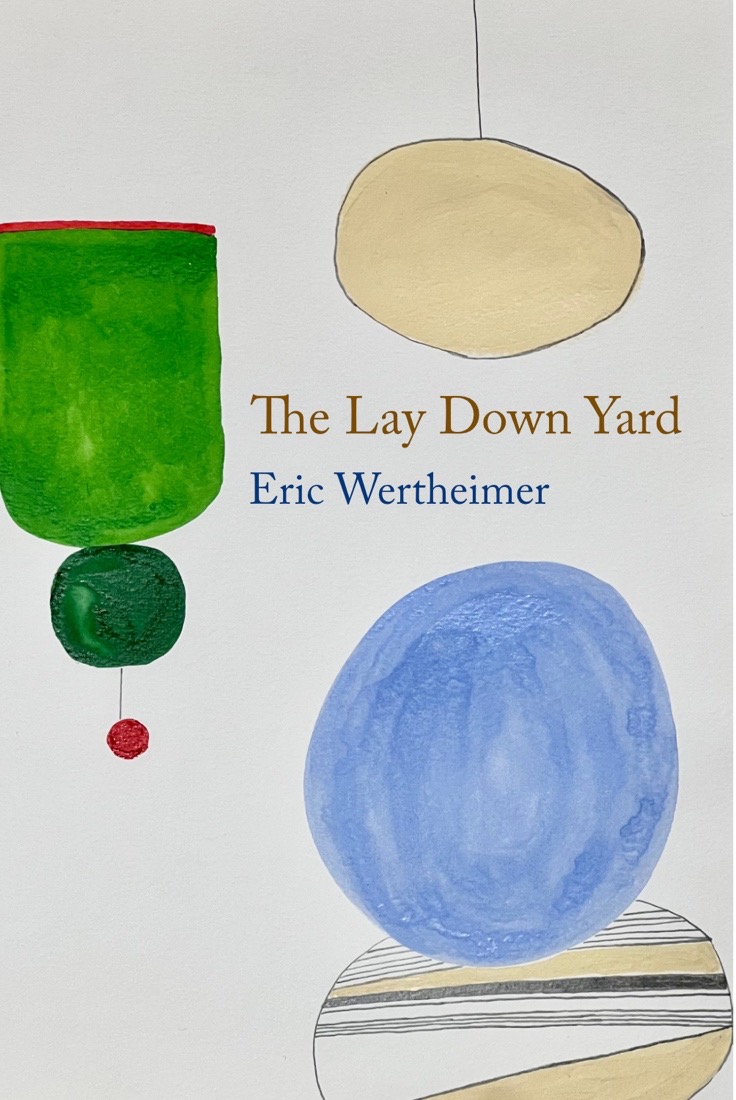
Eric Wertheimer’s third book of poetry, The Lay Down Yard, collects poems that travel a geography of loss and repair, generating broken grammars and lyric logics. The poems here capture flashpoints from a personal migration starting in the Arizona desert, to the Gowanus Canal, to the inlets of Mattituck. The subjects of the poems are wildly various—tech and media, nature and geography, early American cultures, fatherhood, and romantic love. Some hit the lyric, some speak in glitched sentences, and some just make bad jokes. The transit of the book leaves us looking at trees as places to secure things, and as places to hear songs of return and rebuilding.
Avidly: What’s the first sentence of your book? No cheating!
Eric Wertheimer: From the first poem, Turnbuckle:
Twenty years spent
looking for thread,
not knowing thread
runs out the other end,
and strips a bolt, doubly done
over and over until the tree
in which it sits gives way, and saps
the holding bolt to the ground

or the pond, a little off.
What’s something specific you remember about writing this sentence? Where were you? When in the book writing did you write it?
The sentence came from the repair of a shade structure, using a turnbuckle. I had fun with that word, and I realized how it allowed me to perform a kind of masculinity, and how that masculinity was the result of a broken thing.
Can you share an early draft of this sentence? Or tell us about a favorite word, something you wrestled with, some way it changed?
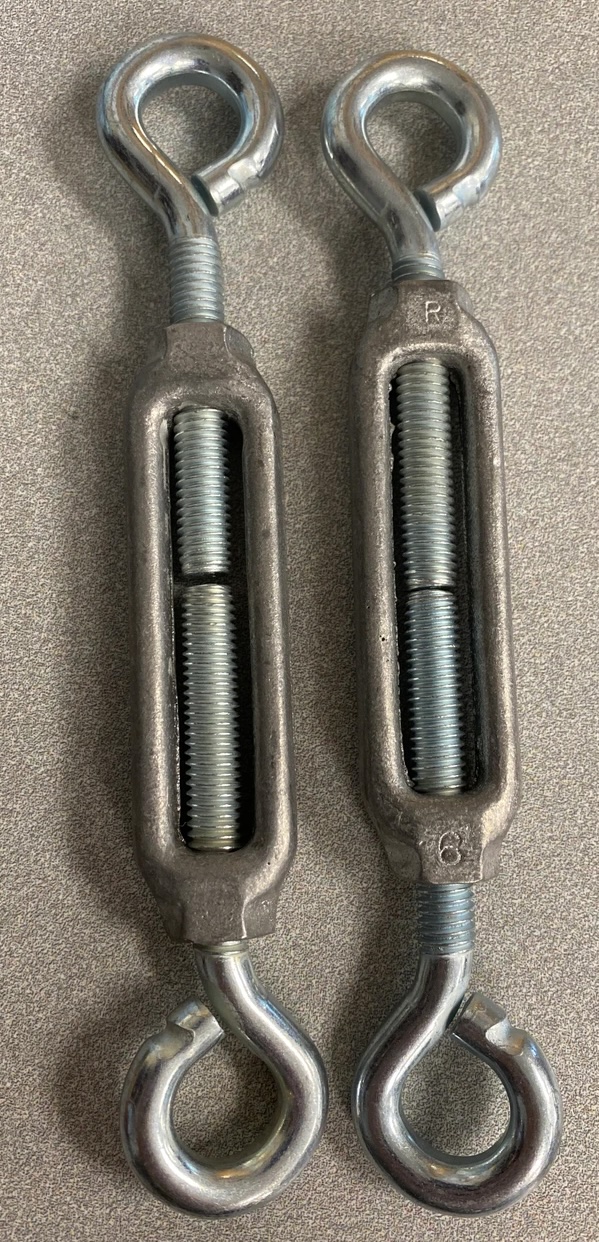
Yeah, again it’s turnbuckle. A thick, technical, word, that harkens back to boxing rings and such, and also useful for making things in the backyard workable again. A securing thing, that turns, twists, and provides freedom.

Is there a writing tic you wrestled in this book? How did you manage it? Or, is there a style/voice thing you really tried for?
Always struggling against myself to reveal what I’m getting at, but not wanting to be too direct, because then what I’m trying to see might disappear.
Tell us one or two specific details about how you like to write: home/office/café, soundtrack or silence, favorite mug, favorite hoodie, preferred mode of pencil/pen/notebook/font/software?
I tend to write emails to myself, with the subject heading “poem,” that contain an idea or a line. Then I keep replying to myself.
Now that it’s all written and done, what occurs to you about how your first sentence connects to the book as a whole? In the ideas, style, experience?
It starts at a specific place in my home in Arizona, before wanderings across the country started, before I moved off from my life there, and it kind of suggests a need to move, that marriage and home are contingent, and that someone, something, or somewhere else lies beyond that last comma.
What’s your favorite sentence in the book? What specifically do you like about it?
Tough one, but I’ll go with, for intrigue:
Nazi swan, neck thickened by a life of
undulated pickings,

your leg is broken.
Share the love: what’s a first sentence written by someone else (any genre!) that you think is great?
Bert Meyer’s poem, “This Morning,” from his collection In a Dybbuk’s Raincoat starts:
We were the rain last night.
Order The Lay Down Yard from Amazon, your favorite bookstore, or BlazeVOX Press!
Eric Wertheimer is a professor of English at Stony Brook University. He is the author of two other books of poetry, Mylar (BlazeVOX, 2012) and Regulus (Four Chambers, 2018), as well as the scholarly monographs Imagined Empires: Incas, Aztecs, and the New World of American Literature, 1771-1876, (Cambridge University Press, 1998), and Underwriting: The Poetics of Insurance in America, 1722-1872, (Stanford University Press. 2006); and a collection of essays Critical Trauma Studies: Understanding Violence, Conflict, and Memory in Everyday Life, co-edited with Monica Casper appeared with NYU Press in 2016. He has received fellowship and grant support from the Mellon Foundation and the Luce Foundation. He lives on the east end of Long Island.

Discover more from Avidly
Subscribe to get the latest posts sent to your email.