

First Sentence Fridays celebrates the prose and process of new books.
About Terms & Conditions: A Memoir
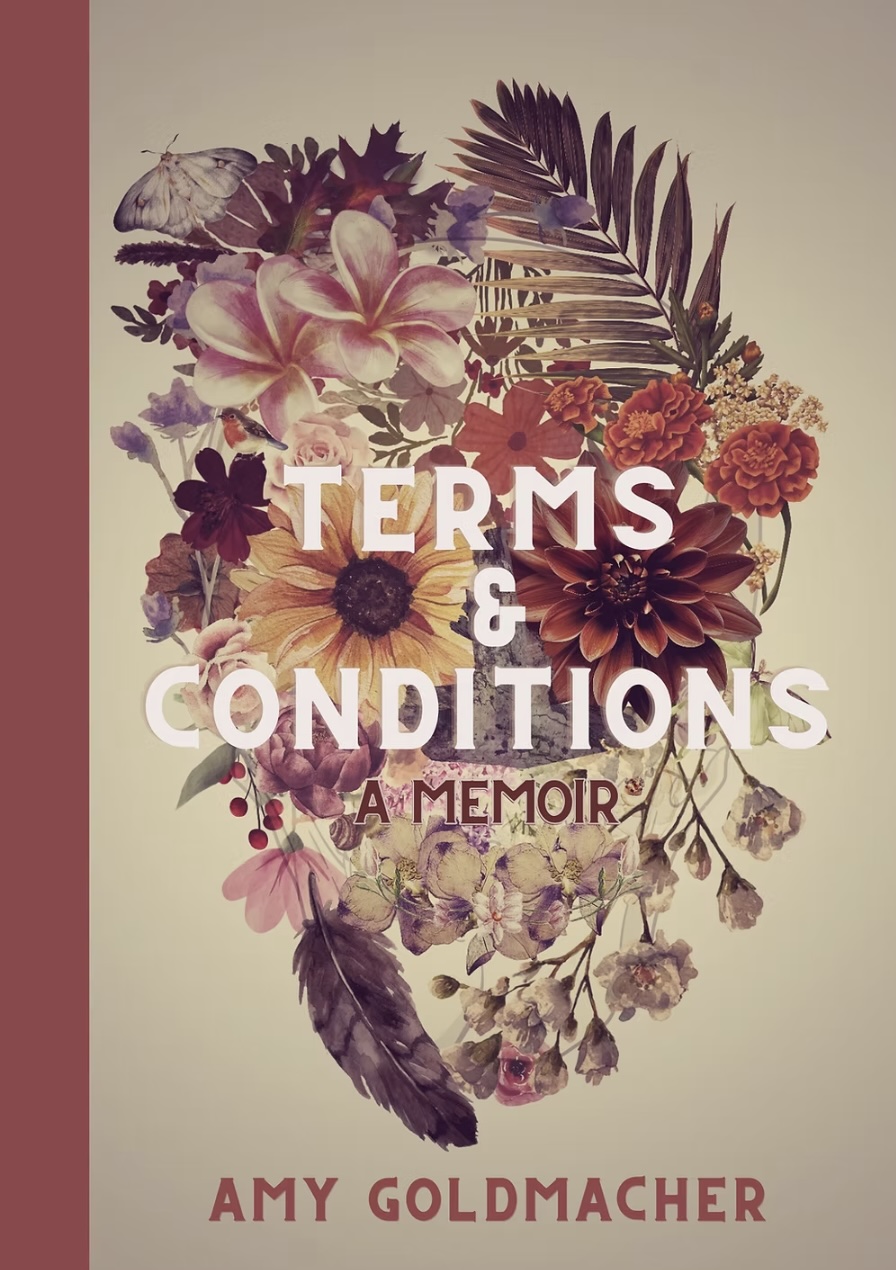
When a 46-year-old hypervigilant anthropologist finds out she has a genetic mutation that means she is at risk of developing the same cancer that killed her father at 48, she must put her grief and anxiety over his death and her emotionally precarious childhood to rest or risk losing her sanity, her husband, and her carefully-ordered life.
Terms & Conditions is an experimental memoir in both form and content. This is a memoir in glossary structure, allowing for analytical distance to the emotional impact of Goldmacher’s many artifacts and memories, giving the author a new perspective on what they carry from the past to her desired future.
Avidly: What’s the first sentence of your book? No cheating!
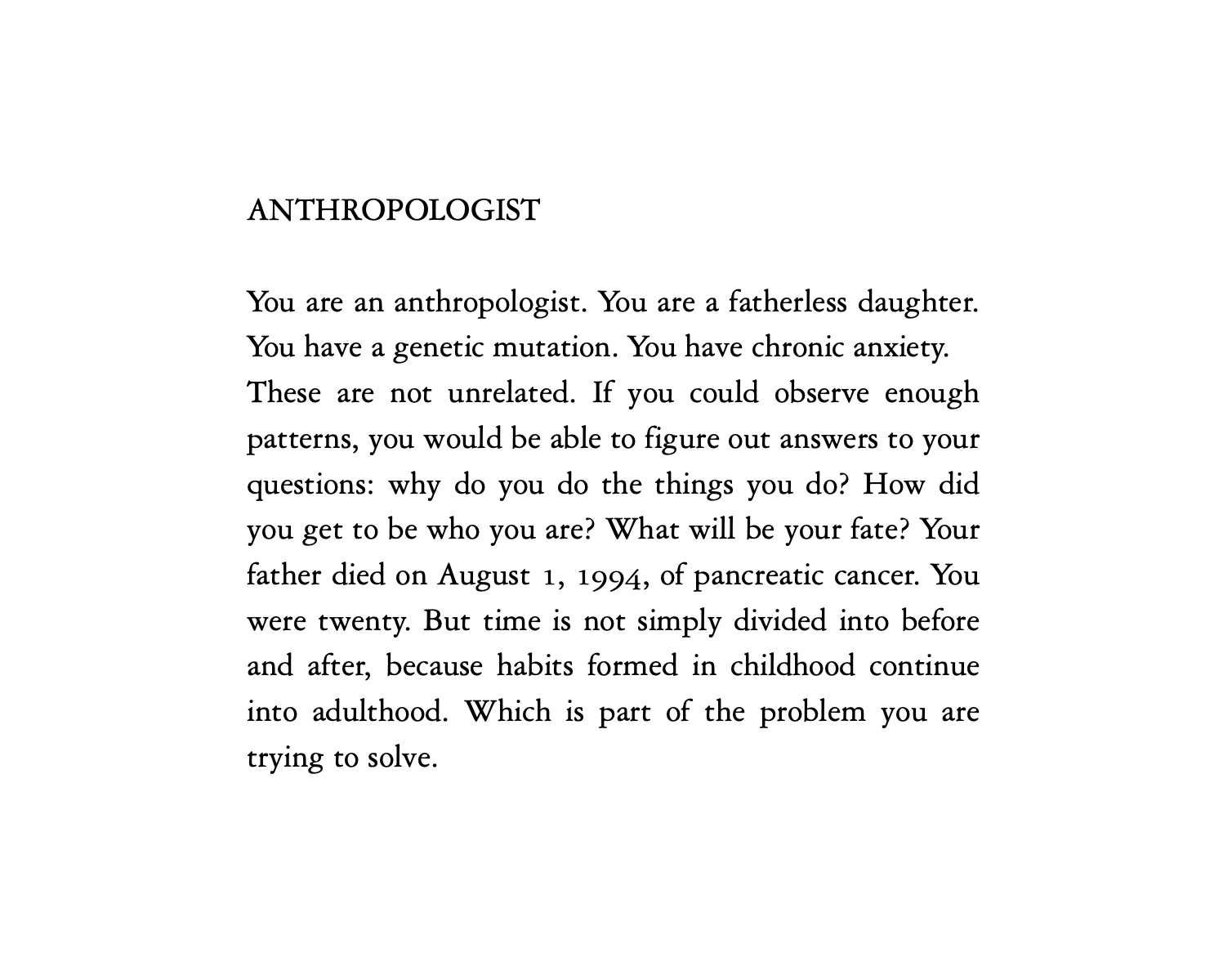
You are an anthropologist.
What’s something you remember about writing this sentence? Where were you? When in the book writing did you write it?
The first sentence most definitely wasn’t written first! I don’t remember exactly where I was physically or temporally, but I believe I was towards the end of editing and revising the manuscript, which would have been 2023-ish.
I wrote it because I wanted a sentence to deliberately orient the reader. The book has a non-traditional content and is in non-traditional form— it’s written in the second person, and the content is organized alphabetically, like a glossary. The first entry of the book, ANTHROPOLOGIST, explicitly tells the reader what to expect from the book in both form and content, because it also raises a question that the narrator must answer for herself by the end.
Now that it’s all written and done, what occurs to you about how your first sentence connects to the book as a whole? In the ideas, style, experience?
I am an anthropologist by training, and I was still “doing” anthropology when I started writing what would become the book. Then I started to let go of that identity as I got deeper into writing and coaching writers. I didn’t know how to connect my anthropology identity to my writing and coaching identity.
Now I’m hearing from readers that they see how my anthropological perspective infused the writing and structuring of the book. So it makes sense to me that the first sentence is the first sentence. And I have re-embraced that part of my identity: I describe myself as an anthropologist and an author. I have always and I probably will always write with that anthropological data-collecting-and-sense-making flavor. My first sentence confirms that for me!
Tell us one or two specific details about how you like to write: home/office/café, soundtrack or silence, favorite mug, favorite hoodie, preferred mode of pencil/pen/notebook/font/software?
I have a dedicated office, which I am so grateful for every day. I feel like I do my best work when I’m fully caffeinated, at my desk, with a second monitor and separate keyboard. I’ve found I can’t context switch very well. If I can get chunks of time, like an uninterruptable hour or two, I am very productive. I’m the only one who can set and keep the boundaries of deep, focused time, and I struggle with it.
I tend to draft in Google Docs and then move to Word for sharing and editing, and/or Dabble or Scrivener when I need to manage all the Docs in a flexible container. It feels super messy but if I try to constrain the work or the process I get stuck. So I let it be messy.
Tell us one other thing you worked hard on in this book and are proud of!
I persevered. I thought that the length of time it was taking to find a publisher was an indication that I should give up. I’m so glad I didn’t give up, but it was a very long road. Seven years from idea to published book.
What’s your favorite sentence in the book? What do you like about it?
I have two that are tied for favorite—both show a way to make an impact with one sentence.
There is one entry in the book, called ANXIETY III, that is one run-on sentence, 475-words long. It spills over from one page to two. I love that the run-on sentence structure conveys so much about the feeling of anxiety.
There is another entry, titled LIES, that’s only one 16-word sentence: “You feel like you have to get more kitty litter, or your husband won’t love you.” That’s it. That’s the whole entry. The context comes from the rest of the book, but that one standalone sentence does a lot of work.
Share the love: what’s a first sentence written by someone else (any genre!) that you think is great?
This isn’t what you asked, but it’s what immediately came to mind: “Jake liked his women the way he liked his kiwi fruit: sweet yet tart, firm-fleshed yet yielding to the touch, and covered with short brown fuzzy hair.” It is from the now-defunct but longstanding Bulwer-Lytton contest to compose the worst first line of a hypothetical novel. The author is Gretchen Schmidt, and she was the 1989 winner in the romance category. This sentence has lived rent-free in my memory for almost forty years – who doesn’t want to have written a sentence that has that kind of staying power?
Amy Goldmacher, Ph.D. is the co-author of Designing an Anthropology Career: Professional Development Exercises. Terms & Conditions is her debut solo-authored book. Winner of the 2022 AWP Kurt Brown Prize in Creative Nonfiction, she currently lives in South Florida.
Discover more from Avidly
Subscribe to get the latest posts sent to your email.