

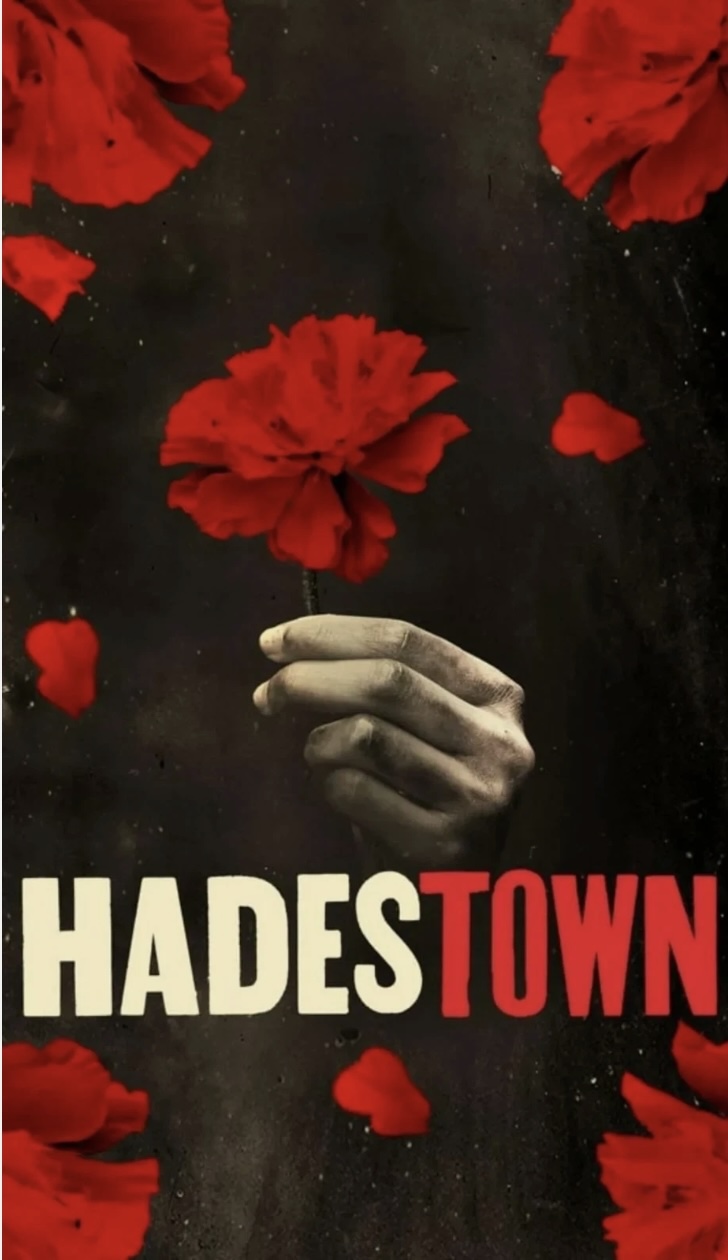
I was in the middle of an existential crisis when an old friend took me to see Anais Mitchell’s smash hit musical Hadestown.
The existential crisis wasn’t about musicals. I thought I understood musicals. The crisis was about my job as an English professor. I loved my job but nobody else seemed to. I started to worry: was there any point to teaching literature or art or theory in catastrophic times?
In his magnificent, conflicted poem from 1939, “In Memory of W.B. Yeats” W. H. Auden appears to share my doubts, writing on the brink of world war, “poetry makes nothing happen.” I’ve always suggested to my students that Auden might be having us on; I’ve always believed that Auden, like me, knew that poetry made everything happen.
That’s how being an English professor felt. I read books, taught books, wrote about books, and got to hang out with vibrant, creative young people. I got paid to do this because the world had agreed that helping young people be vibrant and creative mattered.
But recently there’s a devastating blindness to what higher education can be, and a lack of social faith in the worth of making higher education available to all. It’s like everyone out there is reading Auden badly. Poetry makes nothing happen, pundits on both ends of the political spectrum insist. In an age of increasing economic precarity, only instrumentalised learning—narrowly preparing students for specific jobs—matters.
It’s easy to lose faith in literature, creativity, critical thinking when every social media outlet, every politician, tells you that what you do is worthless. Looking into another looming school year I asked myself: what if Auden meant it and what if he’s right? Should I chuck away all the poetry and stop kidding myself?
It was in this state of despair and confusion that Hadestown hooked me completely.
Hadestown isn’t about English departments or Higher Ed, but it is about what poetry can and can’t do. It’s a retelling of two Greek myths that are also the love stories of the humans, Orpheus and Euridice, and the gods, Hades and Persephone. It’s set in a juke joint at the end of world with the world’s greatest bar band. The music soars and boogies, even when the story gets dark. Hades’ jealousy of Persephone’s time on the surface of the earth has provoked a climate crisis in the world above ground, where spring never comes or is over too soon. Those on the surface live hand-to-mouth, while the enslaved in Hadestown work underground in Hades’ mines, with food enough to eat but without joy, freedom, or individuality. In a chilling prediction of the first Trump administration’s big project, Hades has built a wall around Hadestown to keep the unwanted out and trap the enslaved dead inside. The song “Why do we build the wall?” is a heart-wrenching showstopper. In the meantime, Orpheus the musician/poet (“oh, a player and a liar” Euridice says when he comes on too strong in the first scene) is working on a song that will put the world to rights.
Everything depends on these two love stories for a world in crisis—and that means everything depends on art. The show’s narrator, Hermes, tells us that Orpheus’s transformative poetry could “make you see how the world can be, in spite of how it is.” Opheus’s song could re-align the seasons and bring love, spring, and hope back to earth. In Hadestown, poetry really makes something happen. But Orpheus has writer’s block. His song is not getting written, a storm is coming, and the people on top are starving in endless winter. Eurydice makes a pragmatic if terrible choice, signing her life away to the beckoning Hades. And then Orpheus makes his famous journey to get her back.

Finally – and I refuse to call this a spoiler—the mythical plot takes its toll. Hades and Persephone get a tentatively hopeful ending, but Orpheus and Eurydice wind up where they always do. In the powerful final songs Hadestown’s narrator, Hermes, reminds us of the awesome power of art, despite its inability to change the separate fates of Orpheus and Eurydice. “It’s an old song, and that is how it ends,” Hermes sings slowly. But he continues: the point is to accept this and “still begin to sing it again.” Like the Hadestown cast will do tomorrow, I thought at the end, through tears, like I’ll keep doing too. Teach it again; maybe it will come out differently this time.
The twist in this tale is that a few months ago my colleagues and I received letters telling us that our jobs were “at risk.” My university, along with so many others, is in a devastating financial crisis and the arts and humanities are being hit hard. Politicians who had the privilege of the best arts, humanities, and social sciences educations have ruthlessly cut lifelines for funding. Young people today may never experience what earlier generations found in the university setting: freedom to learn and experiment.
In the crisis-ridden world they’ve inherited, Gen Z will need to reimagine work and redefine meaningful life. Where will their critical and creative resources come from? Skill-specific training for already-existing jobs won’t help them make them make the new future on which the world depends. We are in a collective, not individual, process and it’s necessary, not optional, that the arts and humanities survive.
Hadestown re-ignited my faith in art and literature, myths and musicals. Watching it reminded me why we keep fighting for higher education, keep guiding students through the works that “can make you see how the world can be, in spite of how it is.” I remembered why we go back and read Auden’s poetry or Middlemarch, or watch a musical like Hadestown again and again. It reminded me of why it’s so important to invite students into these utopian, dystopian, devastating, beautiful worlds.
The paradox of art is that repetition invites transformation; it might turn out the same way for Orpheus and Eurydice every time but watching them might change you. You might help make spring come again.
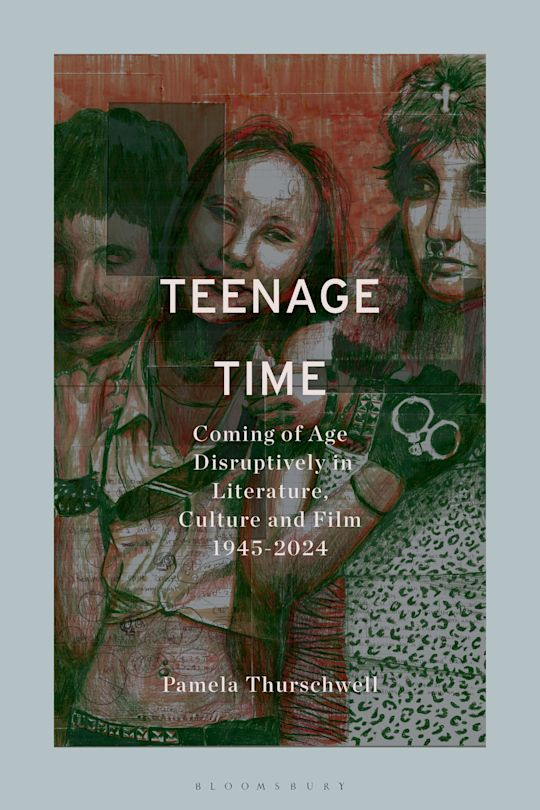
Pam Thurschwell is holding out at the University of Sussex until January. She is the author of, most recently, Teenage Time: Coming of Age Disruptively in Literature, Culture, and Film 1945-2024
Featured Image: “Orpheus,” Roelant Savery.
.jpg)
Body Images: Hadestown Poster; “Thracian Girl Carrying the Head of Orpheus,” Gustav Moreau.

Teenage Time Cover Image: Felix Freeman-Cherry
Discover more from Avidly
Subscribe to get the latest posts sent to your email.