
“The nurse put him on my chest and he looked up at me, a wet wild creature who had crawled from a swamp, all eyes, eyes wide, and his cry was not hysterical, not a lament, but an earnest question: Are you here? Are you here for me?”
—Rachel Kushner, The Mars Room
Two and a Half Months Old
Thursday, May 28th, 2020
I’m still wearing a thick cotton panty liner in my underwear. I’m grateful for the blood that shows up every once in a while. When it makes itself known, I can hold the pad out to your father and he has to say, yes, that’s blood. When it stays inside me, curling itself along the walls of my uterus like a cat, its being is the quick lick from the tongue of a ghost, a nearly imperceptible moisture in the air. But when it peeks its head outside, its existence is made real by corroboration. The haunting becomes a fact. I’m less likely to wake up during precious consecutive hours of sleep to rasp my side of the bed, to propel myself forward out of the rocking chair with you in my hands, to check the sheets, the cushion, for pools of red.
Today, I’m far beyond where I’ve been. This is both literally and metaphorically true. This is not the one-mile radius of our gated Oceanside condominium complex where I shuffle behind other mothers in a conveyer belt of care, holding onto your stroller for balance, trying not to make any sudden movements both for your sake and mine. Already I have torn apart the stitches that hold together my ass and my vagina. (You will never know what it’s like to be split open like that, to break down the middle, to die a little death to let the child out, your asshole a winking eye into another universe. My asshole was a portal. It started a clock that didn’t tick before.) Before you, my body was a locked container for my singular self. After you: a rupture, making space for something new. What might we think up, together, when the borders between our bodies splinter?
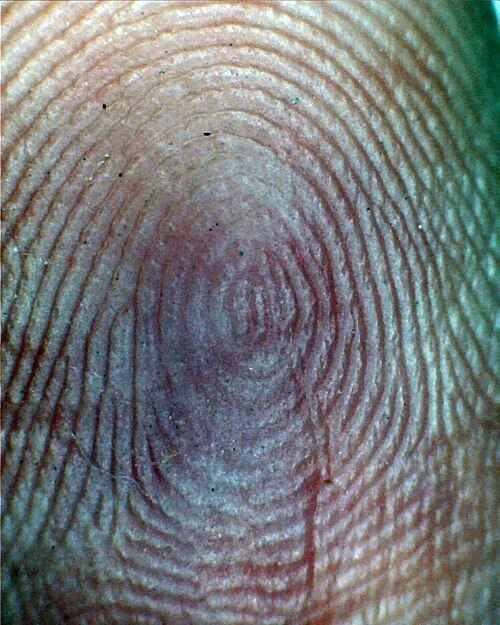
Today, I wander around the interior of Santa Ana Jail, pressing the buttons of elevators and call speakers randomly. Understatement: The prison was complicated to navigate. It’s taken me six months, three rounds of fingerprints, four interviews, countless metal detectors, mounds of paperwork, and many emails (largely unanswered) to get here. A friend of mine is still waiting to be approved. He has waited for over a year, which really means that his background check has been denied. Mark has a record: specifically, he had a bong in his car once. He’s not allowed in because he’s already in the system. I don’t belong here, so I’m allowed in.
Notably, Mark described one of his four interviews as an interrogation. The background investigation went differently for me: after asking me one question (have you ever done drugs?), Investigator Mayfield spent the rest of the hour telling me how happy his wife was when she made the decision to stay home with their second child. It was a long story that was also supposed to be a lesson. I would have rather been somewhere else, but I wasn’t being interrogated.
I ride the elevator up and down, stopping at each floor, peeking my head out, occasionally making eye contact with a man in an orange jumpsuit and Crocs as he shuffles from one locked door to another. Is that the same man from the floor below? A plump Correctional Officer shuffles behind him. Or a tall one. Or one who whistles. I turtle my head back into the elevator before the CO amongst a sea of COs sees me.
Here, my anonymity is a farce; if I think too hard about it, especially as I roam aimlessly around the jail trying to find the instructor’s office, I’ll become immobile out of mortification. There is a person watching me in the surveillance headquarters on a smorgasbord of little screens, following my every wrong turn, watching me click every incorrect button. At any point, those who watch could talk to me through one of the little speakers that dots the hallways, but they don’t. There is no room here for that kind of care.
To be honest, I am perversely happy, walking the halls with no baby you strapped to my chest.
***
Reading in Graduate School
Thursday, June 3rd, 2021
After writing The Mars Room, Rachel Kushner said that New York’s literati found it difficult to imagine that the book had anything to do with her life. They wanted to believe that the book was the “result of extensive research into a world entirely different from her own.” Kushner was annoyed. She said, “You know, I lived and I paid attention to what’s around me, which is kind of a snotty answer but it’s also not a dishonest answer.” Angela Davis said something similar. She said the prison is one of the most important features of our image environment. It is our common sense. It is there, she said, all around us.

I read The Mars Room for the first time in graduate school. Kushner’s novel follows the experience of incarcerated mother Romy’s forceful separation from her son. Reading it made think about what becoming your mother did to me: it reconfigured my sense of self, of others, of who I am to be for others, if I have a choice in the matter. And it makes me wonder: how might my own, limited, conception of motherhood prevent me from asking the right questions? Of seeing, maybe, what is right in front of me.
I think, Motherhood is not purely biological or even singular. It is that and more. It is not that and more. Maybe Motherhood is border-breaking. Maybe Motherhood is radical. Maybe you will be a Mother.
This is also true: Becoming the rupture can also be the means to the building and solidifying of borders. Motherhood is the Motherland; Motherhood is fear, too.
Here’s a question for you: What’s the difference between research and paying attention? I am here at grad school, officially, to conduct research. But I would like to think that what I’m doing is paying attention. I ask you, as your mother, to try your best to never conduct research a day in your life. Research is like fog. It’s not even real fog. But like real fog, it obscures. Fog makes it seem like things are farther away from you than they really are. But wasn’t it obvious? Didn’t even wear their own clothes. The interaction brought back anxieties from grad school, the way his peers could casually criticize others they didn’t know anything about.
***
Pregnant with You at the Inmate Graduation Ceremony
Wednesday, December 18th, 2019
I arrive at the Continuing Education GED Inmate Graduation twenty minutes late, already red-faced and sweating. I wait outside the lobby, pulling at doors that won’t open, making eye contact with the supervisors at the front desk. They stare back at me. A couple trapped outside with me bickers. You fucking said, the woman hisses. I know but they told me these were the hours, he says. Her rage is displaced because it has to go somewhere. You never fucking listen—write shit down. “We’re late,” Carlos greets me. I don’t know him yet, but he holds the door open. I waddle through. He doesn’t follow right away, but chases the couple away from the parking lot, back up the stairs, and through the door. “It’s not your fault,” he says to them. “They make it hard on purpose.” The woman who has been chastising the man rolls her eyes as if saying, fine, you didn’t screw it up this time but just wait.
In the months to come, Carlos will lead me through the labyrinth, holding my hand like you do when we cross the street. Today, he opens the far door, closest to the police department. It is the only door that is unlocked during “business” hours, except between 12-1pm. The women at the front desk take our IDs. One of them looks sad for me. I am not accustomed to this look, especially now. I am visibly pregnant with you and so therefore more often greeted with cheery patriarchy. Her sadness is not refreshing. The other woman, who has yet to look at me, talks sweetly to a Labrador half-awake on a plush dog bed in the corner. “Look at you, you lazy nut! Look at you!” she says. After clearing the metal detector, I deposit my keys in a locker, then follow Carlos blindly through a multitude of buttons, loud buzzes emitted from hidden places, flickering lights, opening and closing doors. One day soon, Carlos will be gone and I will forget everything he taught me, wandering aimlessly under the harsh, invisible glare of the penitentiary eye.
***

Lessons at Home with You
August 15th, 2020
We couldn’t afford a house, so we filtered our Redfin searches to condos. A condo is an apartment where you pay an additional monthly fee called a Home Owners Association fee that is then combined with other people’s fees who live in the complex and is allocated toward things like the landscaping company and the swimming pool maintenance and the purchase of donuts during monthly HOA meetings. Here is an analogy (be advised that analogies, while helpful, can also be unhelpful): HOAs are like the bucket game we play before school. Imagine I hold the bucket, and you put in a pinecone. Then another. Pretend that Camillo puts one in. And then Luna. And also Maxie (pretend he’s allowed to come outside this morning). Soon, we have a bucket full of pinecones. Now imagine we were to use these pinecones to pay for things that the government has already provided, such as a park. But our park will be better, and cleaner, and maybe have the seat with the shovel attached to it that you like so much. And most importantly, only your friends can play in this park. Only Camillo, and Luna, and Maxie. Do you see the appeal? No, Sophia can’t play at our park. Why? Because she didn’t contribute a pinecone. Yes, that’s fair, your face seems to say. Even if Sophia’s porch didn’t have any pinecones on it? You nod solemnly. Yes, those are the rules. To you, rules are magic. Within them are the mysteries of the universe. (I refrain from telling you that the mysteries of the universe can actually be found in my asshole.) I am looking at you too long, so you begin to eat a pinecone. Pinecones are for our hands or for the bucket, I say. You smile, putting the pinecone into the bucket.
In an article entitled “When Kids Won’t Cooperate: Give Choices,” Aha Parenting says:
“Giving choices may be the single most useful tool parents have for managing life with young children. It really is almost a magic wand… ‘Do you want to go to bed now or in five minutes? Five minutes? Ok, do we have an agreement that in five minutes you’ll go to bed no matter what?’ Why does this little trick work so effectively? Because it’s a win-win solution. You’re offering only choices that are okay with you, so you’re happy…No one likes to be forced to do something. Here, because she chooses, she cooperates.”
The lie of regret and of life gone off the rails. What rails. The life is the rails.
***
Pregnant with You at the Inmate Graduation Ceremony
Wednesday, December 18th, 2019
The graduation ceremony takes place in the fishbowl of the 3 Delta ward. Each cell faces the center multipurpose room, creating the fishbowl effect. It could be an elementary school assembly room, if you squinted in a way that concealed the guard room demarcated by shatterproof glass. I attempt to slip into a seat without detection, but I learn in this moment and forever moving forward that the prison is a place of hypervisibility. Greg, my boss, turns to me, says: “You can’t wear tank tops in here.” I feel seen, empirically. And what was it about shoulders? What was law enforcement’s fear of shoulders? Greg is not the law. He is the director of Santa Ana’s Community College Continuing Education Program. He has devoted his life to trying to do a good thing. I don’t say: I’m six months pregnant, none of my clothes fit. I don’t say: My shoulders are not dangerous to you. I don’t say: Come here, rest your head on this shoulder. Do you feel safe?
I barely hear the speeches. All I remember is the cake, received with incongruous gratitude. It was enormous: super-sized, baked in what must have been a commercial oven, covered with a sheet of frosting cut by a machine, rainbow sprinkles dropped from a sky of uniform clouds.
***
Lessons at Home with You, Continued
August 15th, 2020
Each condo complex we looked at within a ten-mile radius from your grandparents’ house had a gate. Gates facilitate community affairs like neighborhood roller hockey games and 4th of July block parties, it has been said. But together, we aren’t a “community,” we’re an “association.” I’m not sure yet how these two terms differ, but it has something to do with the notice we got in the mail letting us know that “it has been reported that your trash bins are not being closed securely.” Then, “it has been reported that your [handwritten: ‘white Volvo’] has been left out overnight. Please be reminded that all vehicles must be parked in garages after 9pm.” I am not sure who makes these reports. Your father, who loves gossip, says that the HOA board gets most of their citation tips from the app, NextDoor. Related: Two weeks before you were born, someone brought a lounge chair into the bathroom at the shared pool. There was a plastic water bottle with the leftovers of a dark liquid and a forgotten sock next to the chair. I know this because I laid down on the lounge chair between using the toilet and washing my hands. I was so tired. The next morning, we received a notice in the mail. “It has been reported that a lounge chair has been moved into the community restroom. It is suspected that shared spaces are being used inappropriately by people outside of the community. Please be diligent about pulling shut all shared doors securely before leaving the premises.” I thought we were an association, I said to your father. We are, he said. So who is the community? I asked. Not the hobo in the bathroom, your father said.
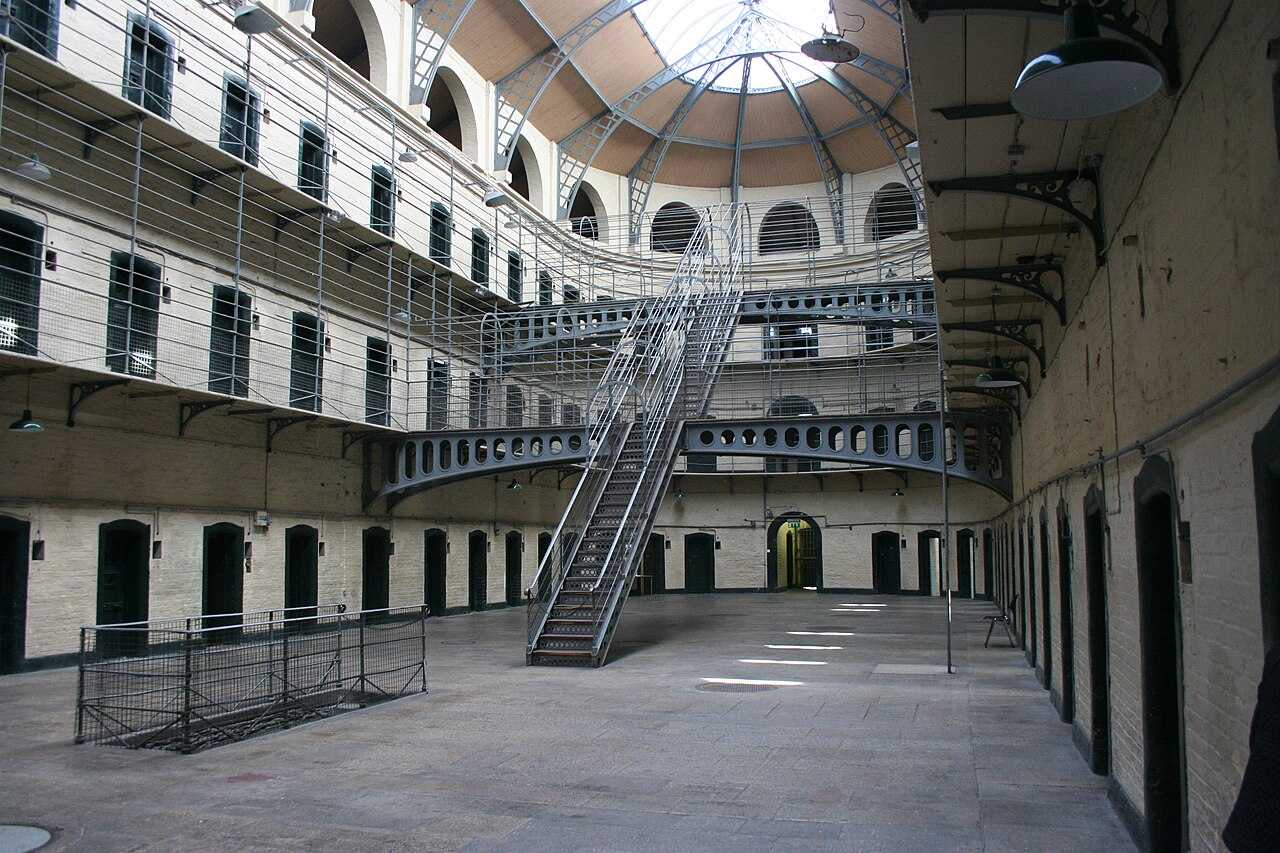
Foucault said “police” is also a verb. When one buys a condo in Southern California, one also becomes a member of the Home Owners Association, which also means that one is consenting, without knowing it, to being policed by her neighbors. But it’s also true that when one becomes a member of the HOA, one also becomes a member of the association’s police. We are trained as we go: as we are policed, we learn the art of policing. This is also how I teach you things: “It has been reported that yogurt wrappers have been found in the dog’s bowl.” Mommy is putting her yogurt wrapper in the trash, not in the dog’s bowl. Would you like to put your yogurt wrapper in the trash now, or in five minutes?
Some scholars have critiqued the over-exuberant interest in policing as a collective method of enforcing social norms. Micol Seigel writes: “While astute in its understanding of the process of building hegemony, that kind of thinking turns away from the actual police. It proffers a slippery slope in which everyone along the famous ‘disciplinary continuum,’ on out to the local kindergarten teacher, would be included…It leaves us disputing only superficial aspects of police practice, never taking up our assumptions about what police are or what they do, foreclosing challenge to the legitimacy of the police in a democracy.” Thinking alongside Seigel, the HOA sent out another notice one week later: “As an added security measure in response to last week’s pool breach, the Board has unanimously agreed to hire a private security company between the hours of 9pm and 6am. You will be receiving a voting card in the mail shortly.” Would you like to hire SafeGuard Security Services or One Shield Security, Inc.?
Things that are true about the Police:
- Police do too much extraneous stuff.
- Police power is malleable.
- Police power can be (and has been) formulated as an “empty vessel.”
- Police power is organized by historical-cultural norms and is structured by institutional forms.
- Police power is unstable across time.
- Police power can be anything, so it is whatever its age requires.
Things that are true about Motherhood:
- Mothers do too much extraneous stuff.
- Motherhood is malleable.
- Motherhood can be (and has been) formulated as an “empty vessel.”
- Motherhood is organized by historical-cultural norms and is structured by institutional forms.
- Motherhood is unstable across time.
- Motherhood can be anything, so it is whatever its age requires.
***
One Year Old
Monday, March 15th, 2021
Today is your birthday. It is also the one-year anniversary of a worldwide pandemic. Thinking about what it means to keep you safe, I make you a cake. As a rule of thumb, I don’t bake. But I try on this hat—this hat that is, for me, the hat of the domesticated—because in my anxiety, I think it might protect you. I was there, as I’d promised, but I was not his protector. A shelter of carrot and coconut.
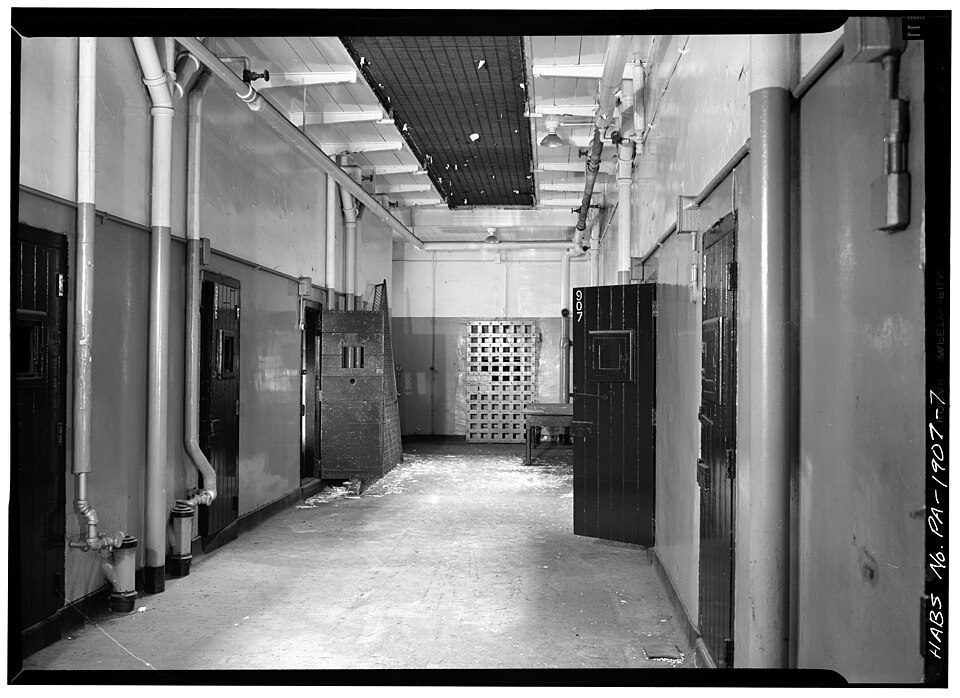
We sing “Happy Birthday” while you look at the cake in a state of discomfort. Your dad tries to spoon some in your mouth but your lips are pursed shut. Grandma takes a bite, “mmmmm-ing” theatrically. She watches my face. She is nervous for me. She knows that the cake was a sacrifice. I pretend I am unbothered. You begin to cry.
I have been an instructor at the jail for almost a year now and I have yet to meet my students in person. I enter the jail to log onto the jail’s internal software, to catalogue names into an Excel spreadsheet, to check that spreadsheet with another roster housed in Santa Ana Community College’s external system, and to save that modified roster onto the desktop of the circa 2008 PC. I handwrite each student’s name onto a packet from the stack of packets that an assistant has brought over from the college. We are not allowed to use the jail printers. We can leave with no documentation from the internal system. These are rules that protect a lie: the inside stays inside, the outside stays outside.
I have half the faith [delusion] of Gordon Hauser. If his students could learn to think well, to enjoy reading books, some part of them would be uncaged. That was what Gordon Hauser told himself and what he told them, too. Reading can help to pass the time, and even then, only some of the time. For some students, the readings are never long enough. For others, the language offends their very being.
I am Gordon of Kushner’s novel, but with exposed shoulders. No clothing in any shade of blue…no sweatpants or sweatshirts…no exposed shoulders… Unlike in The Mars Room, my shoulders are not a class position; they don’t mark me as kin of the incarcerated. My shoulders are a gender position. My shoulders render me female, necessary. I am not surplus, to be filed away and hidden from view within the walls of a prison. I am the body in need of protection that justifies the surplusing of the leftovers.
My rosters change every day. Jails are temporary holding places. Also true: some people get lost here. Also also true: Not knowing which truth your own body will inhabit is part of what it means to be incarcerated [incapacitated].
It’s possible that I met some of my students at the CE Graduation, the one with the cake, but for their sake, I hope that’s not true. I hope that those who were there then are far gone now. Or, maybe I don’t, because gone could mean gone to a worse place than here. Prison. Or to an outside that offers them no house and no home. The term homelessness takes on new meaning: To be without a home (universal); to be without a house (unlucky). But I have also met people who have no house but claim to have a home. I want to believe them. But I have believed in the magic of borders, and that belief has the habit of crowding out the others.
One of my students is writing a novel. Rules were such that no plants were to grow. But Kenny grew one anyway. It could be argued that Kenny’s novel makes a claim that people are homes, and houses are places to take oxytocin and after, for the police to raid. Kenny’s novel also suggests that women are homes, and that the more homes you have, the more shelters you can run to when the police are chasing you. I don’t know whether to find this suggestion empowering or offensive. What if I don’t want to be a home? What if I want to be sheltered?



But then again: Perhaps my desire to be sheltered is a predetermined desire, a desire that I inhabit as I become more female [white]. As Sarah Haley notes, it was my body’s endowment with white femininity that made possible the production of “knowledge about the proper role of gendered and racialized laboring bodies,” “gendered spheres of labor,” and “the sanctity of the prominent symbolic rationale for Jim Crow.” If the convict be a female… Some might say I am already sheltered, always within the act of asking for and conceding shelter, as “I” was sheltered then, even within the prison walls.
It is true that I am offered houses that are a certain kind of protection, a protection not offered to other women. Men make their bodies houses, their arms reaching over me like wide-brimmed umbrellas as they open the door, accompany me to my car, buy me dinner. Some men make a life protecting “me,” protecting “me in the plural.” Maybe I am protected. (For the purpose of this thought experiment, we will overlook the moment that the umbrella turns on me, the moment that the umbrella was/is/will be made wild by a passing storm, maybe a storm I made with my own hands, and that wayward umbrella makes its way at me, turning shelter into something else, riding the wind and landing…)
“I am protected.” But am I free? I am not. I am not. I am not. Do you believe me?
I have always wanted things, but since having you, wants are becoming difficult to decipher from needs. I want to be both part of a home, involved in the act of homing, and I want to be homed. I want to be sheltered and sheltering. I want to be cause and effect. I want the ontological paradox. On some days—when the stitch tore, when I look at you in the quiet, when I smell you while you sleep—I am that paradox: a thousand olds made new. Yes, I think I’m special. That’s on account of me being myself.
Nicole Fleetwood writes: “There are lessons here, developed by the punished and imprisoned, about how to create, to forge relations, and to embody and represent one’s life under unimaginable conditions…Prisons…exist inasmuch as we allow them to.”
I know there are practical, tangible directionalities to abolition. There are orientations, that, in the spirit of Sara Ahmed, change the way we see the room. I want to believe enough to hurl my body into these spaces, to inhabit the chair differently, to pick an entirely different chair. But what I need is the [fill in the blank: gumption, fearlessness, recklessness. Or is it Freedom?] to believe in the black hole, that rupture in the border that makes a future possible, that hole that brought me you.
Ahmed says: “To care is not about letting an object go but holding onto an object by letting oneself go, giving oneself over to something that is not one’s own.” I gave him life. It is quite a lot to give. It is the opposite of nothing. And the opposite of nothing is not something. It is everything.
Allie Harrison is finally done with grad school and now spends her days teaching college writing when not on the 5 freeway (which is most of the time). While her two little people sleep (she will never be pregnant again), she’s at work on a literary thriller.
Discover more from Avidly
Subscribe to get the latest posts sent to your email.